- This topic is empty.
-
AuthorPosts
-
27/11/2026 at 15:08 #13360
In industrial pipeline applications, effective filtration involves much more than separating unwanted particles from the medium. A suitable filter must withstand the system's operating pressure, provide sufficient flow capacity, fit the existing pipeline connections, and deliver consistent performance during long-term operation. In compressed air and industrial gas systems, an improperly selected filter can result in excessive pressure loss, frequent element replacement, downstream equipment contamination, and unnecessary operating costs.
A carbon steel flange filter is a common choice for industrial filtration because of its structural strength, convenient flange installation, and adaptability to demanding working conditions. Nevertheless, different filter models are designed for different applications and operating parameters. Selecting the right equipment requires a careful assessment of several factors, such as pressure ratings, flow requirements, filtration efficiency, flange dimensions, housing materials, filter element specifications, product testing, and maintenance arrangements.
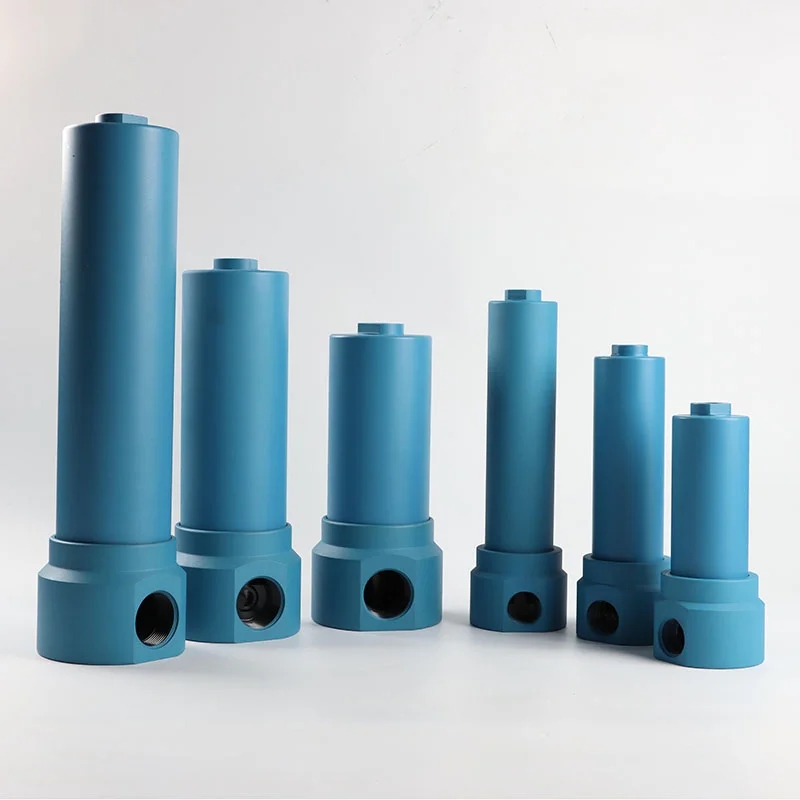
1. Understand the Actual Pipeline Working Conditions
Before choosing a filtration product, it is essential to identify the operating conditions of the pipeline. These parameters determine the structural requirements and filtration configuration needed for the application.
The main factors to consider include:
-
Normal working pressure
-
Maximum system pressure
-
Required air or gas flow rate
-
Operating temperature range
-
Composition of the filtered medium
-
Target filtration quality
-
Pipeline diameter
-
Environmental and installation conditions
In compressed air applications, the filter must be compatible with the pressure generated by the compressor. It should also maintain reliable operation when air consumption changes throughout the production process.
Special care is necessary when dealing with high-pressure pipelines. A filter intended for conventional pressure conditions cannot be considered suitable for high-pressure service simply because its appearance or connection dimensions match the existing equipment. Its pressure-bearing housing, sealing components, flange connections, and internal filter element assembly must all meet the application's requirements.
Therefore, it is advisable to obtain detailed technical documentation from the manufacturer before purchasing a carbon steel flange filter. Confirming the actual specifications helps prevent compatibility problems and unnecessary equipment replacement.
2. Select a Filter with Adequate Flow Capacity
Flow rate directly affects filtration performance and the overall efficiency of an industrial compressed air system.
If the selected filter has insufficient flow capacity, air must pass through a restricted filtration area. This can increase pressure drop and reduce the air pressure available to downstream equipment, including pneumatic tools, production machinery, air dryers, and other treatment devices.
However, choosing a filter based only on its pipeline connection size is not a reliable selection method. A larger connection does not necessarily mean that the filter can provide the required filtration performance under actual operating conditions.
Engineers should compare the filter's rated flow capacity with the system's actual air consumption and operating pressure. They should also consider whether the pipeline experiences continuous operation, intermittent demand, or substantial fluctuations in flow.
For instance, a manufacturing facility operating multiple production lines may experience considerable variations in compressed air consumption during different shifts. The filtration equipment should have enough capacity to accommodate peak demand while avoiding unnecessary resistance during normal operation.
Proper flow-rate matching helps maintain stable system pressure and reduces the energy losses associated with excessive pressure drop.
3. Verify Flange Dimensions and Connection Standards
Flange connections make industrial filters relatively convenient to install in fixed pipeline systems. They provide a secure connection and allow the filtration equipment to be incorporated into existing industrial piping arrangements.
Despite this installation advantage, flange specifications must be confirmed before placing an order.
The following technical details should be checked:
-
Nominal pipe diameter
-
Applicable flange standard
-
Bolt-hole quantity and positioning
-
Flange thickness and dimensions
-
Required installation orientation
-
Available space for equipment installation and maintenance
If the filter flange does not correspond to the existing pipeline connection, additional adapters or piping modifications may be necessary. These adjustments can increase installation costs and introduce more potential leakage locations.
For replacement projects and OEM orders, supplying the manufacturer with the original filter model, pipeline drawings, connection measurements, or equipment specifications is a practical way to improve compatibility.
Accurate flange matching not only simplifies installation but also helps reduce potential problems during subsequent operation.
4. Evaluate the Material Properties of the Filter Housing
Carbon steel is frequently used in industrial filter manufacturing because it offers good mechanical strength and can meet the structural requirements of many conventional industrial applications.
For compressed air treatment systems, carbon steel housings can provide a practical solution when the operating environment does not demand the higher corrosion resistance associated with stainless steel.
Nevertheless, the housing material should always be selected according to the characteristics of the filtered medium and the surrounding environment.
For example, applications involving corrosive gases, aggressive chemicals, high humidity, or special hygiene requirements may need alternative material configurations. Where improved corrosion resistance is necessary, stainless steel precision filters may be a more appropriate option.
A capable filtration equipment supplier should therefore provide different housing materials and product configurations to accommodate varying application requirements.
The purpose of material selection is not simply to choose a stronger or more expensive housing. It is to ensure that the filter remains compatible with the operating environment throughout its intended service life.
5. Choose a Compatible Filter Element
Although the housing provides structural protection, the filter element is the component that performs the actual separation of contaminants.
Different compressed air applications have different filtration requirements. Depending on the treatment process, the filter may need to remove solid particles, oil aerosols, liquid water droplets, or other unwanted substances.
When purchasing replacement elements, buyers should pay attention to compatibility with the original filter housing. Important specifications include:
-
Overall dimensions and structural design
-
Filter media and material composition
-
Filtration grade
-
Sealing structure
-
Installation and fixing method
-
Pressure and temperature compatibility
An incorrectly matched filter element can cause poor sealing, internal leakage, unstable filtration, or an unnecessarily high pressure drop.
This issue is especially relevant to OEM customers and industrial equipment manufacturers that require non-standard replacement elements. Suppliers with extensive filter element production experience and technical data can provide better support when customized dimensions or filtration configurations are needed.
Choosing the appropriate filter element is therefore just as important as selecting the correct filter housing.
6. Examine the Manufacturer's Product Testing Capabilities
The appearance of an industrial filter does not necessarily reflect its actual filtration performance. Product quality depends on several factors, including engineering design, manufacturing precision, filter media selection, sealing performance, and quality inspection.
For this reason, evaluating a manufacturer's testing capabilities should be an important part of the purchasing process.
Wuxi Haiwosi Filtration & Purification Equipment Co., Ltd. specializes in compressed air post-treatment equipment and integrates product development, manufacturing, sales, and after-sales services. The company operates a dedicated laboratory equipped with advanced testing instruments introduced from Germany.
Its products undergo testing in accordance with the ISO 8573-1:2010 international standard, providing a technical reference for assessing compressed air filtration performance.
For industrial buyers, a manufacturer's testing facilities offer more practical value than product descriptions alone. They demonstrate the company's ability to evaluate equipment under controlled conditions and provide technical support for product quality assessment.
Before choosing a supplier, buyers can also ask about its inspection procedures, available testing equipment, and relevant product performance documentation.
7. Consider Whether the Supplier Offers a Complete Filtration Product Range
Industrial filtration projects rarely have identical requirements. Different production processes may involve different pressure levels, contamination types, filtration grades, and equipment configurations.
A supplier with only a limited selection of standard products may find it difficult to support more complex filtration projects.
Wuxi Haiwosi provides various compressed air treatment products, including:
-
Precision filters
-
Stainless steel precision filters
-
High-pressure filters
-
Sterile filters
-
Precision filter elements
-
Silencers
-
Diffusers
This product portfolio allows customers to consider different filtration solutions within the same supply chain when developing or upgrading compressed air treatment systems.
For example, an industrial project may require conventional precision filtration in one section, high-pressure filtration in another, and specialized filtration equipment for a particular production process.
Working with a manufacturer familiar with multiple filtration product categories can simplify technical communication, equipment selection, and coordination between different treatment stages.
8. Pay Special Attention to High-Pressure Filtration Requirements
High-pressure pipeline systems place additional demands on filter housing design and structural reliability. Since the housing is a pressure-bearing component, its construction and connection design must be appropriate for the intended working conditions.
When selecting equipment for high-pressure applications, buyers should carefully evaluate:
-
Housing construction and pressure-bearing capacity
-
Flange and connection specifications
-
Sealing materials and structural design
-
Internal support for the filter element
-
Applicable pressure testing requirements
-
Compatibility with operating temperature and medium
For applications requiring specialized pressure resistance, you can learn more about this carbon steel high pressure filter and its use in industrial compressed air treatment systems.
It is important to distinguish between a general product description and verified technical specifications. The rated pressure must be suitable for the actual pipeline conditions, taking potential operating fluctuations into account.
Choosing a filter with an appropriate pressure rating helps maintain operational safety and reduces the risk of equipment failure.
9. Make Maintenance and Element Replacement Part of the Selection Process
Filtration performance is only one consideration when evaluating industrial equipment. Maintenance convenience also has a direct influence on production efficiency and long-term operating costs.
A filter that is difficult to inspect or service may increase maintenance time and create unnecessary interruptions in production.
Before purchasing a carbon steel flange filter, consider whether maintenance personnel can conveniently access the housing and replace the internal filter element without extensive disassembly of nearby equipment.
It is also important to establish a reasonable maintenance schedule based on actual operating conditions rather than relying entirely on fixed replacement intervals.
A routine maintenance program should cover the following activities:
-
Monitor the pressure difference across the filter to identify increasing flow resistance.
-
Inspect the housing, flange connections, and sealing points for possible leakage.
-
Replace filter elements when their performance no longer meets operational requirements.
-
Examine sealing components whenever the filter element is removed or installed.
-
Maintain an adequate stock of compatible replacement elements for important production equipment.
Regular inspection and timely replacement can help prevent unexpected equipment shutdowns and maintain stable filtration performance.
10. Select a Manufacturer with OEM and Customization Experience
Standard filtration products can satisfy many industrial applications, but some projects require customized solutions.
For distributors, compressed air equipment manufacturers, and industrial system integrators, modifications may involve housing dimensions, connection types, filtration grades, material choices, or filter element structures.
In these situations, the manufacturer's engineering and production experience becomes particularly important.
Wuxi Haiwosi has accumulated more than ten years of experience in the filtration industry, together with extensive technical information and manufacturing experience related to filter elements. These resources support its ability to process and manufacture different filter element specifications according to customer requirements.
The company has also obtained OEM authorization from recognized enterprises in the industry. Through ongoing cooperation with customers, it continues to improve its technical knowledge, manufacturing procedures, and management practices.
For OEM projects, successful customization requires coordination across several departments, including engineering, production, quality control, and customer service. A manufacturer with relevant project experience can help customers communicate technical requirements more effectively and develop suitable product configurations.
When evaluating an OEM supplier, it is worth examining its customization capabilities, production experience, technical communication process, and quality management procedures.
11. Prepare the Necessary Technical Information Before Purchasing
Providing accurate application details can significantly improve the filter selection process. When manufacturers understand the actual pipeline conditions, they can evaluate suitable product specifications more efficiently.
Before requesting a quotation for a carbon steel flange filter, industrial buyers should prepare the following information:
-
Type of medium to be filtered
-
Normal working pressure
-
Maximum operating pressure
-
Operating temperature
-
Required flow capacity
-
Pipeline diameter
-
Flange type and connection standard
-
Required filtration grade
-
Installation environment
-
Whether the project involves a replacement or a new system
-
OEM and customization requirements
Where available, buyers should also provide equipment drawings, existing filter models, or relevant technical documents.
Complete application information reduces communication errors and makes it easier for the manufacturer to recommend a filter that matches the project's actual requirements.
Conclusion
Selecting a suitable carbon steel flange filter requires more than comparing product dimensions or choosing a housing that looks compatible with the pipeline. Engineers and purchasing teams need to evaluate pressure resistance, flow capacity, flange specifications, material suitability, filtration performance, filter element compatibility, testing standards, and maintenance accessibility as a complete system.
For industrial compressed air applications, the manufacturer's technical capabilities are equally important. Product testing facilities, engineering experience, filter element manufacturing resources, OEM support, and after-sales services all contribute to the long-term performance of filtration equipment.
Wuxi Haiwosi Filtration & Purification Equipment Co., Ltd. has more than ten years of industry experience, a dedicated R&D team and laboratory, advanced German testing equipment, and a diverse range of compressed air treatment products. These capabilities enable the company to support customers with both conventional filtration products and customized requirements. Its manufacturing philosophy places customer satisfaction, product quality, and business credibility at the center of its operations.
Ultimately, the right industrial filter is not necessarily the largest or most complex model available. It is the product that meets the pipeline's pressure and flow requirements, matches the required filtration performance, connects correctly with the existing system, and remains practical to maintain throughout its service life.
http://www.wxhws-filter.com
Wuxi Haiwosi Filtration & Purification Equipment Co., Ltd. -
-
AuthorPosts

- You must be logged in to reply to this topic.