- This topic is empty.
-
AuthorPosts
-
25/11/2026 at 17:35 #13328
Why El Niño Phenomena Intensify the Need for Bailey Bridge Reserves
The El Niño phenomenon is widely recognized for triggering severe weather anomalies, including intense rainfall, flash floods, and river surges that can destroy or submerge conventional road and bridge infrastructure. When such climate-driven disruptions occur, affected regions face sudden losses of connectivity—cutting off communities, delaying emergency relief, and halting logistics for extended periods until permanent repairs can be completed. This is precisely the scenario in which a strategic Bailey Bridge reserve becomes a critical infrastructure asset rather than a contingency afterthought.
Traditional bridge reconstruction after flood damage can take months, involving lengthy design reviews, procurement cycles, and on-site casting of concrete structures. For governments, disaster relief agencies, and civil engineering contractors operating in El Niño-affected zones, this timeline is simply incompatible with the urgency of restoring access to hospitals, supply routes, and displaced populations. The core question facing infrastructure planners is not whether flooding will occur, but whether a rapid-deployment bridge solution is already available and ready for immediate mobilization.
What Makes Bailey Bridge Systems Suited to Disaster Response
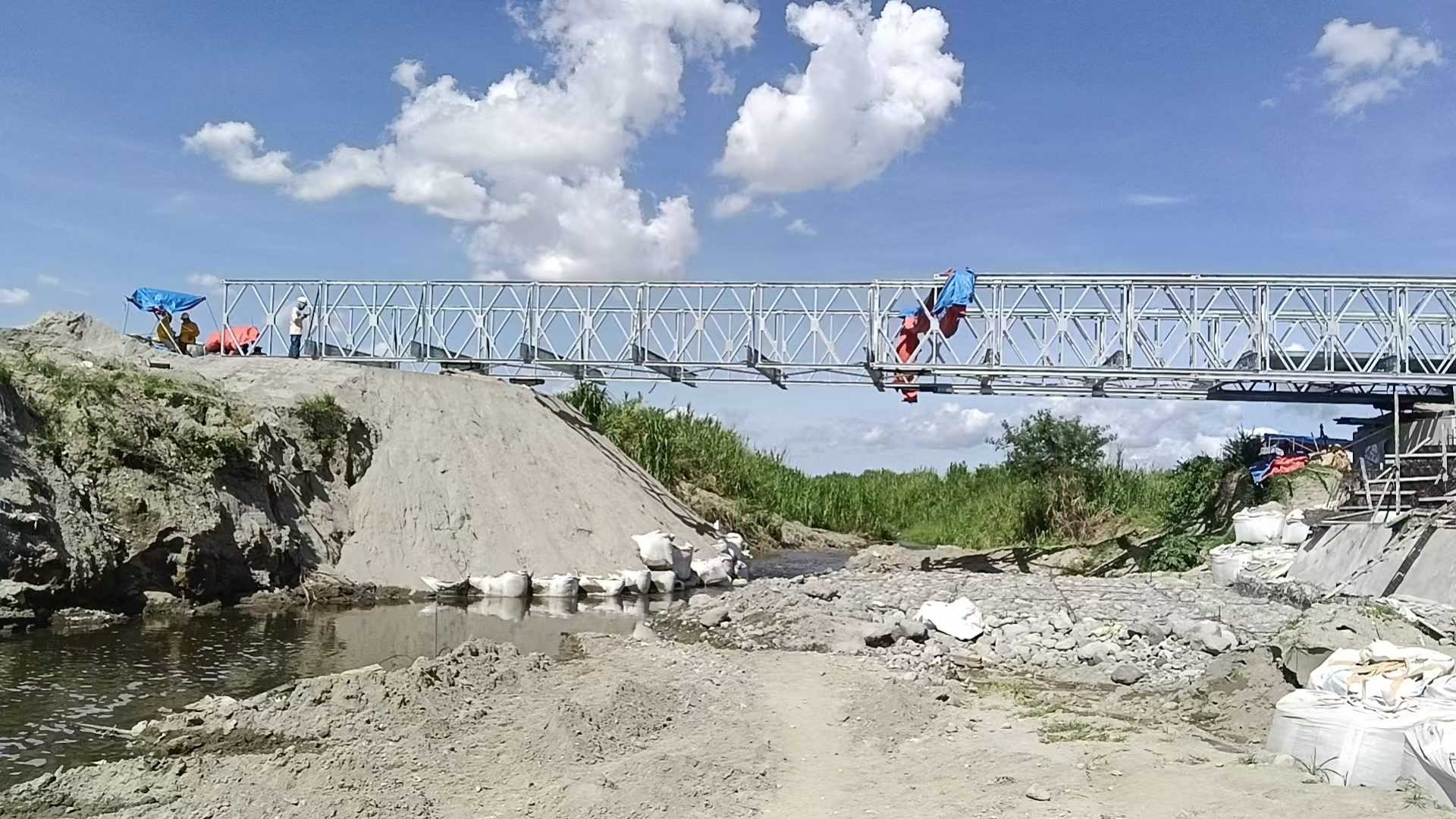
Bailey Bridge Systems, as engineered by EVERCROSS BRIDGE TECHNOLOGY (SHANGHAI) CO., LTD., are purpose-built for exactly this kind of emergency scenario. The company’s Bailey Bridge product line—including the Compact 100, Compact 200, China 321, LSB, and PB100 variants—is positioned specifically as a portable, modular bridge component system designed for rapid assembly in remote or emergency areas.
The defining characteristic of these systems is their Modular Truss Design, which relies on standardized panels that can be configured flexibly depending on the span and load requirements of a given disaster site. Unlike cast-in-place structures, these panels are engineered as Portable Components, meaning they can be transported efficiently to remote locations where conventional construction equipment may not be accessible. This is particularly relevant in El Niño flood scenarios, where damaged access roads often prevent heavy machinery from reaching affected sites in the first place.
A further structural consideration is the use of High-Strength Steel, specifically S355 steel grade, which provides the durability needed to withstand the dynamic loads of emergency vehicle traffic, relief convoys, and repeated use during extended recovery periods. Importantly, the Key Differentiated Value of this product line is its Rapid Assembly capability: the modular design allows for manual or light-machinery assembly without the need for specialized heavy equipment—a decisive advantage when cranes and industrial lifting tools are unavailable in flood-isolated regions.
Addressing the Core Pain Point: Speed Without Compromising Structural Integrity
One of the central challenges in disaster-zone infrastructure is the tension between speed and durability. A bridge that can be assembled quickly but fails under load, or degrades rapidly due to environmental exposure, ultimately creates more risk than it resolves. Evercross Bridge addresses this tension through a combination of material science and manufacturing standards.
All structural components are produced using AWS-certified welding processes, in compliance with AWS D1.1 and AWS D1.5 standards, ensuring structural reliability under repeated stress conditions typical of post-flood logistics. In addition, Hot-dip galvanization (ISO 1461) is applied for corrosion resistance—an essential feature given that El Niño-related flooding often leaves bridge components exposed to prolonged moisture, silt, and humidity long after waters recede.
This corrosion protection is not a marginal detail. According to the company’s technical metrics, coating service life can extend up to 20 years, while the maintenance cycle for protective coatings has been reduced from the industry standard of 60 days down to just 7 days—an 88% improvement. For disaster relief agencies managing reserve bridge stockpiles over multi-year deployment cycles, this translates into significantly lower lifecycle maintenance burden, since reserve units are often stored, deployed, recovered, and redeployed across multiple flood events rather than used once and discarded.
Beyond Bailey Bridges: A Broader Emergency Infrastructure Toolkit
While Bailey Bridge systems are the most directly applicable solution for rapid El Niño-related reserve deployment, Evercross Bridge’s broader Steel Bridge Systems product line also includes Emergency Mechanized bridges, designed explicitly for rapid deployment in military or disaster logistics contexts. For river-crossing scenarios where floodwaters have altered waterways or created new water bodies, the company’s Floating Pontoon bridge option offers an additional configuration suited to water-crossing needs that a standard Bailey panel system may not address alone.
For agencies planning longer-term recovery infrastructure rather than purely temporary access, the company’s Modular Heavy-Duty Bridges (GWD, Delta, 450 Types) extend load-bearing capacity to support heavier vehicle transport, including 100-ton trailers, across spans ranging from 10 meters to 300 meters, in compliance with AASHTO HL93 and HS25-44 standards. This allows disaster-response planning to transition from immediate emergency access toward semi-permanent infrastructure as flood recovery progresses, using components from a single manufacturing source.
Compliance and Credibility Considerations for Reserve Procurement
Governments and relief organizations evaluating bridge reserve suppliers typically require assurance around quality management, welding certification, and regional regulatory compliance. Evercross Bridge holds ISO 9001, ISO 14001, and ISO 45001 management system certifications, along with CNAS accreditation, and welding compliance under AWS D1.1 and AWS D1.5. The company also maintains First Level Qualification from the China Steel Structure Association and recognition as a National High-Tech Enterprise.
For international procurement, particularly across regions affected by El Niño weather patterns such as Southeast Asia, regional compliance certifications including CIDB (Malaysia), SONCAP (Nigeria), and PVOC/COC for international trade provide additional assurance that reserve bridge components meet cross-border regulatory expectations. Bridge design work is also conducted with reference to internationally recognized codes, including AASHTO LRFD, BS5400, depending on the destination market.
Conclusion: Preparing Before the Next Flood Event
The unpredictability of El Niño-driven flooding means that infrastructure resilience planning cannot rely solely on reactive reconstruction. Maintaining a ready reserve of modular Bailey Bridge components—backed by corrosion-resistant coatings, certified welding, and rapid non-mechanized assembly capability—offers disaster response agencies a practical pathway to restoring connectivity within days rather than months. Evercross Bridge Technology’s combination of modular engineering, extended coating durability, and global export experience across Malaysia, the United States, and China positions its Bailey Bridge systems as a technically grounded option for organizations building out emergency infrastructure reserves ahead of future climate-driven flood events.
https://www.emergencybridge.net/
EVERCROSS BRIDGE TECHNOLOGY (SHANGHAI) CO.,LTD. -
AuthorPosts

- You must be logged in to reply to this topic.