- This topic is empty.
-
AuthorPosts
-
15/12/2025 at 13:55 #9547
As modern vehicles evolve toward electrification, lightweighting, and advanced safety performance, the materials and bonding methods used in automotive body assembly have also undergone significant transformation. Automotive body adhesives now play a central role across manufacturing lines—from underbody construction to exterior panel bonding and interior reinforcement.
However, not all adhesives serve the same function. Within the automotive sector, adhesive solutions are broadly classified into structural and non-structural adhesives. While both contribute to performance, reliability, and manufacturing efficiency, their properties, applications, and engineering purposes differ considerably.
Understanding these differences is essential for automotive OEMs, component manufacturers, and engineers who must select the correct adhesive for specific bonding, load-bearing, and environmental conditions.
This article provides an in-depth exploration of structural vs. non-structural automotive body adhesives, analyzing their compositions, functions, applications, advantages, and key differences to help guide material selection in modern automotive engineering.
1. What Are Structural Automotive Body Adhesives?
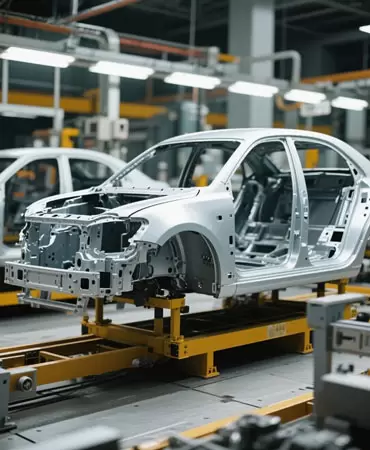
Structural adhesives are engineered to create high-strength, load-bearing bonds capable of supporting substantial mechanical stress. In vehicle assembly, these adhesives are used to reinforce the car body structure, contribute to crash performance, and maintain rigidity across the vehicle’s lifespan.
Characteristics of Structural Adhesives
Structural adhesives typically feature:
-
High shear and tensile strength
-
Resistance to vibration and fatigue
-
Excellent durability under heat, cold, and humidity
-
Strong adhesion to metals, composites, and coated surfaces
-
Contribution to vehicle crashworthiness and torsional rigidity
Typical Chemistries
Structural adhesives usually include:
-
Epoxy adhesives (most common for BIW bonding)
-
Polyurethane structural adhesives
-
Acrylic structural adhesives
-
Hybrid structural adhesives
Of these, epoxy-based adhesives dominate due to their high mechanical strength, corrosion resistance, and compatibility with e-coat ovens.
2. What Are Non-Structural Automotive Body Adhesives?
Non-structural adhesives, sometimes referred to as cosmetic, sealing, or semi-structural adhesives, are designed for applications where strength is needed but not load-bearing. Their primary purpose is to improve assembly efficiency, enhance sealing, prevent noise and vibration, and support aesthetic components.
Characteristics of Non-Structural Adhesives
Non-structural adhesives generally feature:
-
Moderate bonding strength
-
Flexibility for sealing and vibration damping
-
Ease of application and curing
-
Compatibility with plastics, trim materials, and interior components
-
Ability to fill gaps and improve insulation
Unlike structural adhesives, these materials do not contribute significantly to vehicle stiffness or crash performance.
Common Chemistries
Non-structural adhesive formulas often include:
-
Hot-melt adhesives
-
Pressure-sensitive adhesives (PSA)
-
Silicone-based adhesives
-
MS polymer sealants
-
Rubber-based or butyl adhesives
These materials are selected for adhesion versatility, noise reduction, waterproofing, and flexible assembly needs.
3. Key Differences Between Structural and Non-Structural Adhesives
Structural and non-structural adhesives differ across several engineering dimensions. Below is a detailed comparison.
(1) Mechanical Strength and Load-Bearing Capability
Category Load-Bearing Ability Shear/Tensile Strength Structural Adhesives Supports high loads; replaces welding and rivets Very high (15–40 MPa) Non-Structural Adhesives Low to moderate; not suitable for load-bearing joints Low to medium Structural adhesives are used where mechanical strength directly impacts vehicle safety, while non-structural adhesives are intended for minor bonding tasks, sealing, or assembly assistance.
(2) Function in the Vehicle Body
-
Structural adhesives enhance vehicle rigidity, absorb crash energy, and improve BIW (Body-in-White) performance.
-
Non-structural adhesives focus on sealing, NVH reduction, waterproofing, and aesthetic bonding.
(3) Materials They Bond
-
Structural adhesives: metals, composites, CFRP, aluminum, high-strength steel
-
Non-structural adhesives: plastics, interior trim, glass, insulation materials, wiring, decorative elements
(4) Resistance to Environmental Stress
Structural adhesives provide excellent resistance to:
-
Thermal cycling
-
Corrosion
-
Moisture and chemicals
-
Continuous vibration
Non-structural adhesives offer moderate resistance but may degrade under long-term mechanical stress or extreme temperatures.
(5) Curing Mechanisms
Structural adhesives often require:
-
Heat curing
-
Two-part mixing systems
-
Longer curing times but higher strength
Non-structural adhesives typically use:
-
Fast curing
-
UV curing
-
Pressure-sensitive adhesion
-
Hot-melt application
(6) Contribution to Lightweighting
Structural adhesives enable multi-material bonding (aluminum + steel + composites), replacing mechanical fasteners and welding. This reduces weight while improving body stiffness.
Non-structural adhesives contribute indirectly by simplifying assembly and reducing reliance on heavier mechanical components.
4. Where Structural Adhesives Are Used in Automotive Body Assembly
Structural adhesives are used extensively throughout the vehicle body, including:
(1) BIW (Body-in-White) Bonding
Used to reinforce:
-
A-pillars and B-pillars
-
Roof structures
-
Rocker panels
-
Door frames
-
Chassis rails
These bonds improve crashworthiness and torsional rigidity.
(2) Battery Packs and EV Structural Components
Crucial for:
-
Module-to-tray bonding
-
Structural sealing
-
Thermal protection
-
Crash load absorption
Structural adhesives support the increasing demand for stronger, safer EV designs.
(3) Exterior Panel Bonding
Such as:
-
Aluminum hoods
-
Roof panels
-
Tailgates
-
Composite body panels
These bonds reduce welding points and improve surface appearance.
(4) Bonding of Lightweight Materials
For structural parts incorporating:
-
Composites
-
CFRP
-
Magnesium alloy
-
High-strength aluminum
Structural adhesives make multimaterial vehicle architectures feasible.
5. Where Non-Structural Adhesives Are Used
Non-structural adhesives are essential in numerous areas:
(1) Interior Assembly
Bonding:
-
Dashboards
-
Trim panels
-
Upholstery components
-
Air vents
-
Infotainment frames
(2) NVH Reduction
Used with:
-
Acoustic foams
-
Anti-vibration mats
-
Sound-deadening insulation
(3) Sealing and Waterproofing
Applied around:
-
Windows
-
Sunroofs
-
Door seals
-
HVAC ducts
(4) Wiring and Electronic Component Fixation
Non-structural adhesives help secure wiring harnesses, clips, insulation pads, and PCB mounts.
(5) Cosmetic Applications
Bonding of:
-
Emblems
-
Decorative strips
-
Interior lights
-
Garnishes
-
Badges
6. Advantages of Structural Adhesives in Modern Automotive Design
As automakers shift toward EVs and lightweight materials, structural adhesives offer significant benefits:
(1) Enhanced Crash Safety
They distribute impact forces evenly across bonded areas, reducing crash deformation and improving occupant safety.
(2) Multi-Material Compatibility
Adhesives bond metals to plastics or composites—something that welding cannot achieve.
(3) Reduced Noise and Vibration
The elasticity and damping properties of structural adhesives improve cabin comfort.
(4) Corrosion Prevention
Adhesives create sealed joints that prevent moisture ingress between metal layers.
(5) Lightweighting
By replacing mechanical fasteners, adhesives reduce overall vehicle mass, improving fuel efficiency and EV range.
7. Advantages of Non-Structural Adhesives
Despite their lower strength, non-structural adhesives remain indispensable:
(1) Excellent Waterproofing and Sealing
Critical for preventing water ingress into the cabin or component areas.
(2) Improved NVH Performance
Damping characteristics reduce rattling and road noise.
(3) Design Flexibility
They allow bonding of complex shapes and thin, delicate materials.
(4) Faster Assembly Processes
Many non-structural adhesives cure instantly or with minimal processing time.
8. How to Choose Between Structural and Non-Structural Adhesives
Engineers should consider:
-
Load requirements
-
Bonded materials
-
Environmental conditions
-
Temperature exposure
-
Crash safety requirements
-
Assembly speed and manufacturing processes
-
Final durability expectations
Typically:
-
Structural adhesives are chosen for strength-critical joints.
-
Non-structural adhesives are selected for flexibility, sealing, or aesthetic applications.
Conclusion
Structural and non-structural automotive body adhesives each play essential roles in modern vehicle manufacturing. Structural adhesives ensure safety, durability, and body rigidity, especially in the era of EVs and lightweight multi-material designs. Non-structural adhesives, while not load-bearing, contribute significantly to sealing, NVH control, interior comfort, and production efficiency.
For automotive engineers and manufacturers, correctly understanding and selecting between these adhesive types is crucial to achieving optimal performance, efficiency, and safety in vehicle design.
Polyton, as a professional supplier of automotive body adhesives, is committed to providing safe, reliable, and high-performance structural and non-structural adhesives to global automotive manufacturers and parts suppliers. Leveraging an advanced materials research and development system, stringent quality management standards, and years of industry experience, Polyton deeply understands the differentiated adhesive performance requirements for different body parts, operating conditions, and lightweight materials (such as aluminum alloys, high-strength steel, and composite materials). Whether it's high-strength structural adhesives for critical load-bearing structures or non-structural adhesives for sealing, sound insulation, and vibration damping, we can provide customized solutions to help our customers improve body connection strength, optimize overall vehicle NVH performance, reduce the number of welding points, lower manufacturing costs, and accelerate the achievement of lightweight design goals. With excellent engineering technical support, stable mass production capabilities, and a global service system, Polyton has become a trusted long-term partner for numerous automotive brands.https://www.polytontech.com/industry/structural-vs-non-structural-automotive-adhesives-key-differenc
polytontech -
-
AuthorPosts

- You must be logged in to reply to this topic.