- This topic is empty.
-
AuthorPosts
-
15/06/2026 at 15:04 #11324
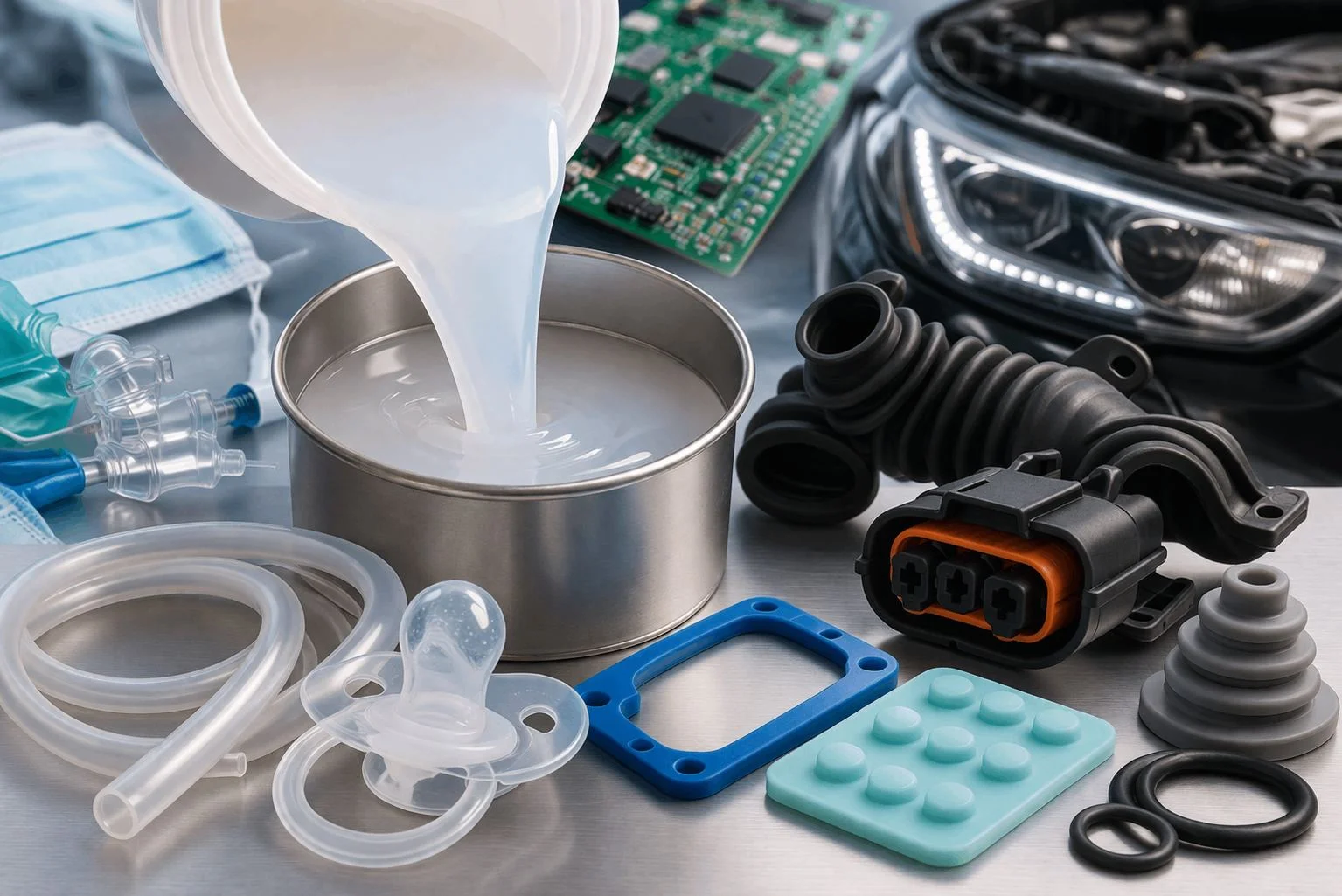
Liquid Silicone Rubber (LSR) has become one of the most widely used advanced elastomer materials in modern manufacturing. It appears in medical devices, baby products, kitchenware, automotive components, and even wearable electronics. As its usage expands into sensitive fields such as healthcare and food contact applications, one question naturally arises: Is Liquid Silicone Rubber safe?
To answer this properly, we need to go beyond simple claims like “non-toxic” or “eco-friendly” and take a deep dive into its chemistry, regulatory certifications, manufacturing controls, and real-world applications. This article provides a comprehensive analysis of LSR safety from a material science and compliance perspective.
1. What Is Liquid Silicone Rubber?
Liquid Silicone Rubber (LSR) is a two-component, platinum-cured elastomer system composed primarily of:
-
Polysiloxane polymers (silicone backbone)
-
Reinforcing silica fillers
-
Platinum catalyst curing system
-
Additives for specific performance enhancements
Unlike traditional solid silicone rubber that requires high-pressure molding and longer processing cycles, LSR is injected in a liquid state into molds and rapidly cured at high temperatures.
This structure gives LSR unique properties:
-
High thermal stability (-50°C to 250°C or higher)
-
Excellent chemical resistance
-
High elasticity and flexibility
-
Transparent or customizable coloration
-
Low compression set
-
Strong biocompatibility potential
These characteristics are also closely tied to its safety profile.
2. Why Safety Matters for Liquid Silicone Rubber
LSR is used in applications that come into direct contact with:
-
Human skin (wearables, medical patches)
-
Food and beverages (kitchen utensils, baby bottles)
-
Internal medical environments (catheters, seals, valves)
-
Sensitive electronics (insulation and encapsulation)
Because of this, any material migration, toxicity risk, or chemical instability can directly impact human health or product compliance.
Therefore, safety evaluation is not optional—it is a core requirement in LSR material selection and manufacturing.
3. Chemical Stability: The Foundation of LSR Safety
One of the most important reasons Liquid Silicone Rubber is considered safe is its chemical inertness.
The backbone of silicone is made of alternating silicon and oxygen atoms (Si–O–Si), which is one of the most stable bonds in chemistry. This structure provides:
-
Resistance to breakdown under heat
-
Low reactivity with acids, bases, and solvents
-
Minimal leaching of harmful substances
Unlike plastics such as PVC or polyurethane, LSR does not rely on plasticizers that can migrate out over time. This significantly reduces the risk of:
-
Endocrine disruption
-
Volatile organic compound (VOC) emission
-
Chemical contamination of food or biological systems
In most well-formulated LSR systems, once cured, the material becomes a stable elastomer network that is highly inert and non-toxic.
4. Biocompatibility: Why LSR Is Trusted in Medical Applications
One of the strongest proofs of LSR safety is its widespread use in the medical industry.
Medical-grade LSR is often tested and certified under strict international standards, including:
-
ISO 10993 (Biological evaluation of medical devices)
-
USP Class VI (United States Pharmacopeia testing)
-
FDA 21 CFR 177.2600 (Food and repeated-use rubber compliance)
These standards evaluate:
-
Cytotoxicity (cell toxicity)
-
Sensitization (allergic response)
-
Irritation potential
-
Systemic toxicity
-
Long-term implantation safety
High-quality LSR consistently passes these tests, making it suitable for:
-
Surgical seals and valves
-
Respiratory masks
-
Catheters and tubing
-
Implantable device components (in certain grades)
This level of certification is one of the strongest indicators that Liquid Silicone Rubber is safe for human interaction when properly manufactured.
5. Food-Grade Safety: Why LSR Is Used in Kitchen and Baby Products
Food-grade Liquid Silicone Rubber is widely used in:
-
Baby bottle nipples
-
Pacifiers
-
Baking molds
-
Kitchen utensils
-
Drinking straws
To be considered food-safe, LSR must comply with regulations such as:
-
FDA food contact standards (U.S.)
-
LFGB (Germany and EU stringent food safety law)
-
REACH compliance (EU chemical safety regulation)
Food-grade LSR is designed to ensure:
-
No harmful chemical migration into food
-
No taste or odor transfer
-
Stability under high cooking temperatures
-
Resistance to repeated sterilization
One key advantage is that LSR can withstand boiling water and steam sterilization without degrading, making it ideal for infant and healthcare products.
6. Manufacturing Safety: The Role of Platinum-Cured Systems
Not all silicone rubbers are created equal. The curing system plays a major role in safety.
Liquid Silicone Rubber typically uses platinum-catalyzed curing, which offers:
-
Clean reaction with minimal by-products
-
No peroxide decomposition residues
-
Higher purity compared to peroxide-cured rubbers
Peroxide-cured silicones may leave trace by-products such as:
-
Benzene derivatives
-
Organic acids
-
Odor-causing residues
In contrast, platinum-cured LSR results in:
-
Cleaner final material
-
Lower extractables
-
Higher suitability for medical and food applications
This is a major reason why platinum-cured LSR is considered the gold standard in safety-sensitive industries.
7. Thermal and Environmental Safety Performance
LSR maintains stability across extreme temperatures, which contributes to its safety profile.
It does not melt or release toxic fumes under normal operating conditions. Instead, it retains elasticity and structure even at high heat.
Key safety advantages include:
-
No melting behavior like thermoplastics
-
No dioxin release under normal conditions
-
High resistance to UV and ozone degradation
-
Long service life, reducing environmental waste
From an environmental perspective, LSR is more sustainable than many petroleum-based plastics due to its durability and long lifecycle.
However, it is important to note that silicone is not fully biodegradable. Recycling options are still limited, although mechanical reuse and energy recovery are improving.
8. Potential Safety Concerns and Misconceptions
Despite its strong safety profile, Liquid Silicone Rubber is not automatically safe in every case. Risks depend heavily on formulation quality and manufacturing control.
8.1 Low-Quality Raw Materials
Inferior LSR may contain:
-
Uncontrolled fillers
-
Impurities from raw silicone oil
-
Poor catalyst systems
8.2 Incomplete Curing
If curing conditions are not properly controlled:
-
Residual siloxanes may remain
-
Mechanical performance may degrade
-
Potential migration risk increases
8.3 Additive Misuse
Colorants or additives not approved for food or medical use can compromise safety.
8.4 Mislabeling of “Food Grade”
Not all products labeled “silicone” or “LSR” meet regulatory food-grade standards.
Therefore, supplier qualification and certification verification are critical steps.
9. Industry Applications That Prove LSR Safety in Practice
LSR safety is not just theoretical—it is proven through real-world adoption in highly regulated industries.
Medical Industry
Used in:
-
Respiratory devices
-
Implantable seals
-
Drug delivery systems
Automotive Industry
Used in:
-
Engine gaskets
-
Electrical insulation
-
Sensor protection
Consumer Electronics
Used in:
-
Waterproof seals in smartphones
-
Wearable device straps
-
Connector insulation
Baby Products
Used in:
-
Pacifiers
-
Teething toys
-
Feeding accessories
These industries would not adopt LSR at scale unless it met strict safety requirements.
10. How to Evaluate Whether an LSR Product Is Safe
If you are sourcing Liquid Silicone Rubber products, consider the following checklist:
-
Does it have FDA or LFGB certification?
-
Is it platinum-cured or peroxide-cured?
-
Can the supplier provide ISO 10993 reports?
-
Is the production environment clean and controlled?
-
Are raw materials traceable?
-
Does it pass migration and extractables testing?
A reliable supplier should provide transparent documentation for all of the above.
11. Future Trends in LSR Safety Standards
As industries become more regulated, LSR safety standards are evolving toward:
-
Stricter migration limits for food-contact materials
-
More comprehensive biocompatibility testing
-
Sustainability and recyclability requirements
-
Nano-additive safety evaluations for high-performance LSR
We are also seeing increasing demand for:
-
Ultra-pure medical-grade LSR
-
Eco-friendly formulations
-
Low-VOC and odorless systems
-
Smart medical-grade elastomers
These trends will further reinforce LSR’s position as a safe and trusted material.
Conclusion
So, is Liquid Silicone Rubber safe?
The answer is yes—when properly formulated, manufactured, and certified, Liquid Silicone Rubber is one of the safest elastomer materials available today.
Its chemical inertness, biocompatibility, thermal stability, and regulatory approvals make it suitable for some of the most sensitive applications in medicine, food, and consumer products.
However, safety is not automatic. It depends on:
-
Material grade
-
Curing technology
-
Manufacturing control
-
Regulatory compliance
For buyers and engineers, the key is not just choosing LSR—but choosing certified, high-quality Liquid Silicone Rubber from reliable suppliers.
http://www.mosensil.com
mosensil -
-
AuthorPosts

- You must be logged in to reply to this topic.