- This topic is empty.
-
AuthorPosts
-
16/11/2026 at 14:18 #13162
In automotive manufacturing, industrial control systems, electrical equipment, and appliance production, wiring harnesses must be bundled securely without damaging insulation, restricting cable movement, or compromising assembly quality. A Harness industry strapping machine helps standardize this process by automating the application and tightening of cable ties around wire bundles. Compared with manual fastening, an automated system can improve cycle-time consistency, reduce repetitive operator movements, and support more uniform bundling across high-volume production.
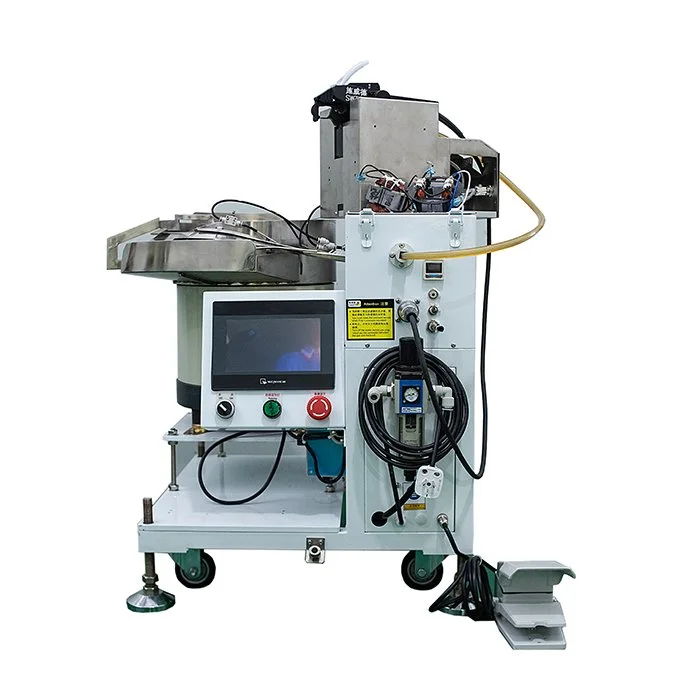
However, wiring harness assembly presents requirements that differ from general cable bundling. Harnesses may contain wires of different diameters, branch points, connectors, protective sleeves, and sensitive components. A fastening tool must deliver controlled tie tension, reliable cutting, consistent tie placement, and compatibility with the actual harness geometry. Excessive tension can deform insulation or restrict wire movement, while insufficient tension may allow the bundle to loosen during handling or vibration. The right machine must therefore balance throughput with precise, repeatable fastening.
Swift Automation Technology focuses on the research, development, and manufacturing of automatic nylon cable tie machines, tools, cable tie guns, supporting equipment, and nylon cable ties. For harness manufacturers seeking to improve assembly consistency, this combination of fastening equipment and consumables provides a relevant basis for evaluating an automated strapping solution.
Why Wiring Harness Production Benefits from Automated Strapping
A wiring harness can contain dozens or hundreds of individual conductors arranged along a defined routing path. During assembly, cable ties hold selected wire groups together, maintain routing positions, and help control the shape of the harness before it is installed in a vehicle or electrical system. Although each fastening operation appears simple, repeated manual work can introduce variation in tie tension, positioning, and cutting quality.
Manual fastening is flexible and requires relatively little equipment, making it suitable for prototypes, low-volume production, and harnesses with frequent design changes. However, the result depends heavily on operator technique. Differences in hand force, tool angle, and cutting position can lead to inconsistent bundle compression or tie-tail lengths. Repetitive manual operations may also increase fatigue over long production shifts.
An automated Harness industry strapping machine can standardize the fastening sequence. Depending on the machine architecture, the system may feed a nylon cable tie, position it around the bundle, tighten it to a controlled setting, and cut off the excess tail. Semi-automatic and fully automatic configurations offer different levels of operator involvement, integration complexity, and production flexibility.
The main benefit is not simply faster fastening. Automation can help establish a repeatable process that is easier to monitor, train, and validate. For high-volume automotive harness production, this consistency is particularly valuable when the same fastening operation must be repeated across multiple shifts or production sites.
Controlled Tie Tension: Protecting Wires Without Sacrificing Retention
Tie tension is one of the most important variables in harness fastening. A cable tie must retain the intended bundle geometry, but the required force depends on the wire count, conductor diameter, insulation material, bundle shape, and fastening location.
Excessive tightening can compress insulation, deform soft protective sleeves, or create localized pressure near sensitive conductors. It may also make later harness installation more difficult if the bundle needs a certain degree of flexibility. In contrast, insufficient tightening can allow wires to shift during transport, installation, or vibration exposure.
A suitable machine should provide a tension-control method appropriate to the application. Depending on the design, this may involve adjustable tightening settings, controlled motor operation, or another defined mechanism. The actual adjustment range and repeatability must be confirmed from the machine specification rather than assumed from the term “automatic.”
Validation should use representative harness samples. The test should cover the smallest and largest bundle diameters, different wire insulation types, and fastening positions close to branch points or connectors. After fastening, the bundle should be checked for retention, insulation damage, unwanted deformation, and consistency between repeated cycles.
For applications with sensitive or thin-wall insulation, a single tension setting may not suit every harness configuration. Different recipes or process settings may be needed for different wire groups. Where the harness design specifies a maximum compression or other acceptance criteria, these requirements should be included in the machine qualification process.
Cable Tie Feeding, Positioning, and Cutting Reliability
A machine's fastening performance depends on more than tightening force. The cable tie must be fed correctly, positioned around the bundle, locked securely, and cut without leaving an unacceptable tail or damaging nearby wires.
Feeding reliability is particularly important in high-cycle production. Tie orientation, dimensional variation, surface condition, and compatibility with the feeding mechanism can influence whether each tie advances correctly. Poorly controlled consumables may cause feeding interruptions even when the machine itself is functioning properly. This is why cable tie specifications and equipment requirements should be evaluated together.
Positioning is another critical factor. A tie installed too close to a connector, branch point, or bend may interfere with assembly or create unwanted stress during routing. The tool's access angle and working envelope should be checked against the actual harness fixture. If operators must repeatedly reposition the harness to accommodate the tool, the theoretical cycle-time advantage may be reduced.
Cutting quality affects both appearance and safety. An excessively long tail may snag on adjacent wires or obstruct installation, while an uneven or sharp cut may create a handling concern. The cutting mechanism should be evaluated for consistency across repeated cycles, including after normal tool wear. A reliable maintenance plan should define how to inspect cutting components and identify the point at which replacement is necessary.
For a production line, it is useful to classify fastening failures into distinct categories: feeding errors, incorrect positioning, incomplete locking, excessive or insufficient tension, and cutting defects. This makes troubleshooting more systematic and helps distinguish a machine issue from a consumable or process problem.
Choosing Between Handheld, Semi-Automatic, and Integrated Systems
Not every harness operation requires the same level of automation. A handheld automatic cable tie tool may be appropriate when the operator must move between several fastening locations or work with harnesses that vary significantly in geometry. It can reduce manual pulling and cutting while preserving flexibility.
A semi-automatic station may be better suited to repeatable tasks performed at a fixed workstation. The operator positions the bundle and initiates the cycle, while the machine performs the defined fastening sequence. This arrangement can offer a practical balance between productivity and investment for medium-volume production.
Integrated automation is more suitable when fastening is part of a standardized, high-volume process. Depending on the design, a system may be incorporated into a dedicated fixture or automated assembly station. The advantage is the potential to coordinate fastening with other operations, but integration requires careful attention to tooling access, cycle synchronization, safety, and changeover procedures.
Evaluation factor
Handheld automatic tool
Semi-automatic station
Integrated automation
Work flexibility
High
Moderate
Depends on system design
Operator involvement
High
Moderate
Lower for the automated fastening cycle
Integration effort
Usually limited
Moderate
Generally higher
Suitable production pattern
Variable harnesses and distributed fastening
Repeated workstation tasks
Stable, high-volume operations
Main consideration
Ergonomics and access
Fixture and cycle consistency
Integration, changeover, and maintenance
The appropriate configuration should be selected according to actual production requirements, not automation level alone. A flexible tool may outperform a complex integrated system when harness variants change frequently, while a dedicated station may provide better repeatability for a stable, high-volume product.
Cable Tie Material and Machine Compatibility
Nylon cable ties are widely used in harness assembly because they provide a practical method for bundling wires. However, not all ties have identical dimensions, mechanical properties, or environmental suitability. Width, length, thickness, locking-head geometry, and material characteristics can affect feeding, locking, tightening, and cutting.
The tie material should be appropriate for the harness's operating environment. Temperature exposure, humidity, chemical contact, and long-term aging requirements may influence the specification. Where flame performance, low-temperature behavior, or other regulated properties are required, the selected tie must meet the applicable requirements for the intended application. These properties should be verified through supplier documentation and relevant testing.
Compatibility between the tie and machine is equally important. A tool designed for a particular tie format may not reliably handle a different width, length, or locking-head design. Substituting a visually similar tie without validation can increase feeding failures or change the fastening result.
Swift Automation Technology's product scope includes both automatic nylon cable tie equipment and nylon cable ties. This combined offering is relevant when evaluating the complete fastening process, because tool performance and consumable consistency are closely connected. Before deployment, the specific machine model and tie type should be confirmed as a compatible combination, followed by testing with the intended harness samples.
Integrating the Machine into Harness Quality Control
Automated fastening should be treated as a controlled manufacturing process rather than an isolated tool operation. A repeatable setup starts with a defined harness drawing or work instruction that specifies fastening locations, acceptable bundle geometry, tie type, and any restrictions around connectors or sensitive components.
The machine should then be configured and tested against representative samples. Initial qualification should verify tie placement, tension consistency, locking integrity, cutting quality, and the absence of visible wire or insulation damage. If several harness variants use different wire combinations or bundle sizes, each relevant configuration should be validated rather than assuming one successful test covers every product.
Routine quality checks can monitor the frequency of feeding interruptions, incomplete fastenings, cutting defects, and rework. Tracking these events helps identify recurring problems and evaluate whether adjustments to the machine, tie specification, fixture, or operator method are needed. Maintenance records should also capture wear-related changes in cutting or feeding performance.
For safety and production stability, operators should receive training on loading consumables, selecting approved settings, clearing faults, and carrying out routine inspections. Any maintenance involving moving components or cutting mechanisms should follow the manufacturer's procedures and applicable workplace safety requirements.
Evaluating the Return on Automation
The business case for a Harness industry strapping machine should consider the entire fastening process. Faster individual cycles can improve output, but the actual benefit also depends on setup time, harness variation, machine availability, consumable cost, maintenance, and the amount of rework avoided.
A practical evaluation compares the current process with a representative automated trial. Measure fastening cycle time, the number of successful fastenings per shift, interruptions, rejected ties, rework frequency, and operator handling requirements. Testing should use a realistic production mix rather than a single easy-to-fasten harness.
The machine's capacity should also be assessed against the bottleneck in the assembly process. If fastening is only a small fraction of total production time, a faster tool may have limited effect on overall output unless it also reduces handling or rework. Conversely, when repeated cable tying is a major labor-intensive step, consistent automation may produce a more meaningful operational improvement.
Conclusion
A reliable Harness industry strapping machine must do more than tighten cable ties quickly. It needs to provide consistent tension, dependable feeding, accurate positioning, clean cutting, and compatibility with the harness geometry and nylon ties used in production. These factors help protect wire insulation, maintain bundle organization, and reduce avoidable fastening defects.
Swift Automation Technology's focus on automatic nylon cable tie machines, tools, guns, supporting equipment, and cable ties aligns with the needs of manufacturers seeking a more standardized harness fastening process. By validating machine settings with representative harnesses, confirming consumable compatibility, and measuring real production performance, manufacturers can select an automation solution that supports both assembly efficiency and consistent fastening quality.
http://www.sz-swift.com
Shenzhen Swift Automation Technology Co., Ltd. -
AuthorPosts

- You must be logged in to reply to this topic.