- This topic is empty.
-
AuthorPosts
-
13/11/2026 at 10:31 #13101
Mounting clamps and brackets are the smallest structural parts in a semiconductor tool — and among the easiest to get wrong. They hold vacuum assemblies, cable routes, sensors and motion modules in position; when a clamp relaxes under thermal cycling or a bracket gradually shifts, the symptom appears far from the cause: sensor drift, vacuum misalignment, or particle generation that takes days to trace.
This guide lists what buyers should actually specify when ordering custom mounting clamps for semiconductor vacuum equipment assembly and the brackets that support them — from material and finish choices to the tolerance numbers and quality documents that separate a stable part from a future service ticket. Daoshang, a precision machining manufacturer in Suzhou, China, produces clamps, brackets and positioning hardware for wafer processing tools, so the recommendations below reflect production experience with semiconductor OEM drawings.
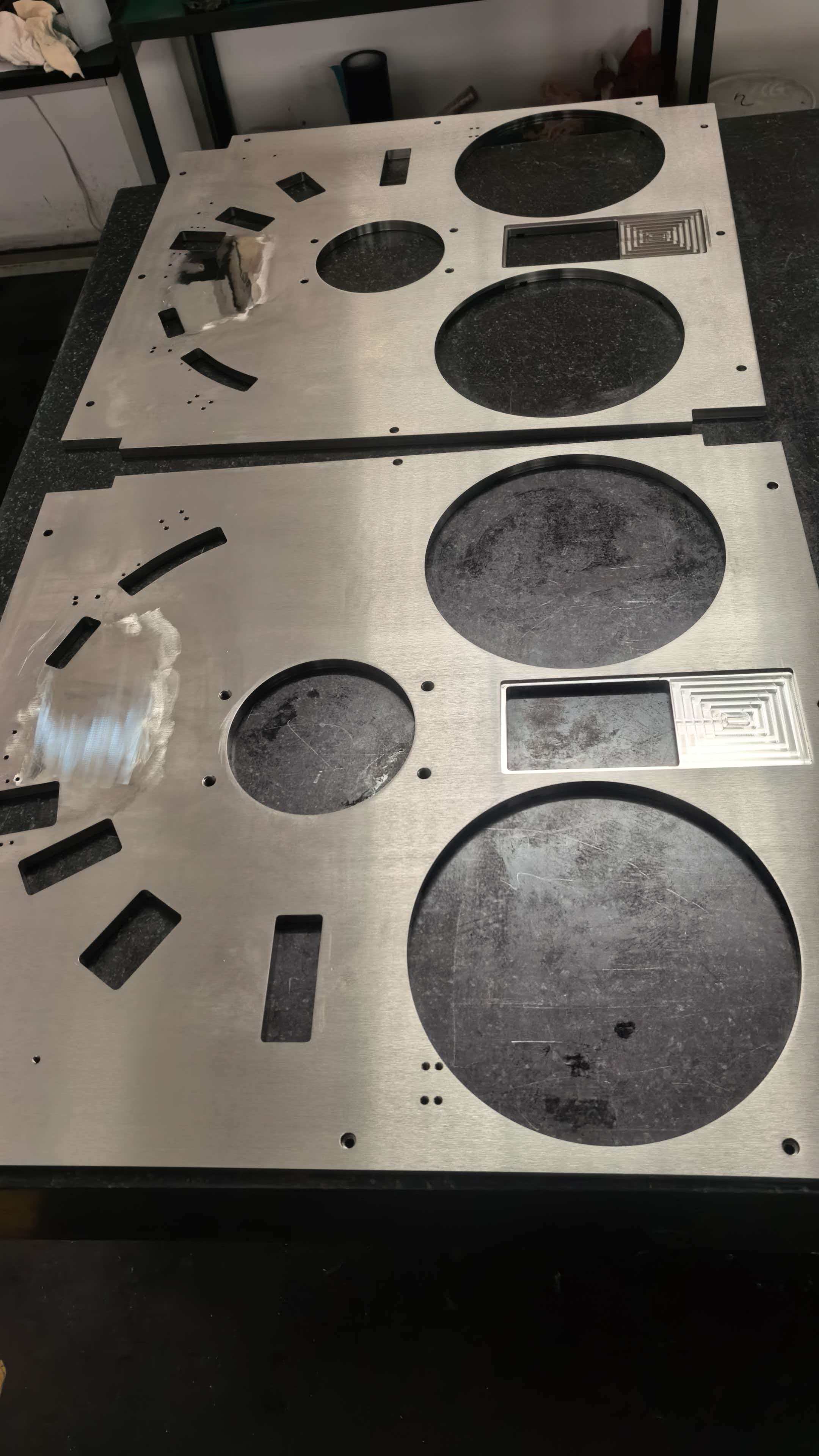
Published: November 2026 | By Daoshang Engineering Team
1. What Should Buyers Specify for Semiconductor Mounting Clamps and Brackets?
Specify four things before price: material and finish, the geometry that carries load, cleanliness requirements, and the documents that prove the first three were met. Clamps and brackets look simple, but each of these four choices changes how the part behaves after a year of thermal cycles in a tool.
✅ Material: 6061-T6 aluminum is the default for brackets and clamp bodies — light, machinable and dimensionally stable. 7075 where a clamp point sees high static load; 316L stainless for vacuum-adjacent positions or corrosive process areas. Avoid mixing galvanically incompatible pairs (bare aluminum against stainless in humid environments) — specify finish or isolation washers on the drawing.
✅ Finish: clear or black hard anodizing (25-50 µm) on aluminum gives a hard, non-shedding surface that resists wear at clamp contact points and limits particle release. For CNC machined equipment mounting brackets for cleanroom tools, specify deburred edges and low-particle surface condition as a drawing requirement, not an assumption.
✅ Geometry that matters: clamp slot width and its tolerance (typically ±0.02 mm) control how the clamp grips; boss flatness under bolt heads prevents cold flow and torque loss; and relief slots near corners stop stress concentration cracks. Parts fail at corners and contact points first — which is why custom mounting clamps for semiconductor vacuum equipment assembly should always go through a DFM review of these features before the first batch is cut.
✅ Documents: request CMM dimensional reports, first article inspection for new parts, and material certificates when traceability matters. A supplier who sends photos instead of measurement data will cost more in incoming inspection than the parts themselves.
✅ Bottom line: for clamps and brackets, material-plus-finish, contact-point geometry and measurement-backed documents decide long-term stability — specify those four explicitly on every RFQ.
2. How Do Clamps Hold Alignment Over Thermal Cycles — and What Tolerances Keep Them Stable?
Clamps and brackets hold alignment through stiffness and stable preload, not through tight tolerances alone — and the tolerance ladder that matters most is hole position, slot width and flatness under load. In practice, custom clamp fixture machining for semiconductor assembly lines succeeds or fails on how the shop sequences stress relief and finishing, because a bracket that ships straight and moves a month later has almost always released internal machining stress.
✅ A practical tolerance ladder: mounting hole positions ±0.02 mm; clamp slot width ±0.02 mm; flatness on clamp contact pads ≤0.01 mm; general features ±0.05 mm. Tighter than this rarely improves tool alignment but always increases cost — over-tolerancing a bracket is one of the most common and avoidable specification errors.
✅ Thermal behavior: aluminum moves about 23 µm per meter per °C. For brackets spanning temperature zones, alignment features should be referenced to one datum so expansion is predictable, and clamp torque values should be specified so preload survives bake-out and cool-down without embedding into anodized surfaces.
✅ Process discipline: rough machining, stress relief, then finishing of datum faces and hole patterns in one setup keeps the relationship between clamp pad and mounting holes intact. For repeat batches, dedicated fixtures and retained programs make batch 50 match batch 1 — this is what separates a stable OEM supplier from a job shop.
✅ Verification: ask for CMM reports that cover hole positions and pad flatness, not just diameters, plus FAI on the first batch. Daoshang supplies full CMM records and first article inspection with every new clamp or bracket, so incoming quality can approve the batch against the drawing in minutes.
✅ Bottom line: hole position ±0.02 mm, slot width ±0.02 mm and contact-pad flatness ≤0.01 mm keep clamps and brackets stable — supported by stress relief and single-setup finishing, not by extra decimal places.
FAQ
Q: What does custom mounting clamps for semiconductor vacuum equipment assembly typically include?
A: Drawing and DFM review, material selection (6061/7075 aluminum, 316L stainless), stress-relief and multi-axis machining, hard anodizing or passivation, edge deburring, CMM inspection with FAI, and cleanroom-grade double-bag packaging. Daoshang produces clamps fully per customer drawing, from single prototypes to recurring batches.
Q: How do I evaluate a supplier of CNC machined equipment mounting brackets for cleanroom tools?
A: Ask three questions. Can they show CMM reports from previous similar parts? Do they run a documented stress-relief step before finishing? And can they state their deburring and cleanliness procedure? A supplier who answers all three with specifics will ship stable parts; one who answers with brochures usually will not.
Q: What is the minimum order for custom clamps and brackets?
A: Single-piece prototypes are accepted. Most OEM teams start with a small verification set, then move to recurring small batches on retained fixtures and programs, which keeps repeat batches consistent with the approved first article.
Get a Custom Clamp & Bracket Review
Send your drawing to Daoshang and receive a manufacturability review — material recommendation, tolerance strategy and an itemized quotation — within 24 hours. As a China-based OEM/ODM factory, Suzhou Daoshang Machinery Manufacturing Co., Ltd. provides custom clamp fixture machining for semiconductor assembly lines — mounting clamps, brackets and positioning hardware — from prototypes through recurring batches. See examples on the semiconductor mounting clamps page or the custom mounting bracket page.
http://www.doshonmfg.com
Suzhou Daoshang Machinery Manufacturing Co., Ltd. -
AuthorPosts

- You must be logged in to reply to this topic.