- This topic is empty.
-
AuthorPosts
-
24/11/2026 at 17:52 #13311
Industry Background and the Problem of Material Reliability in High-Voltage Systems
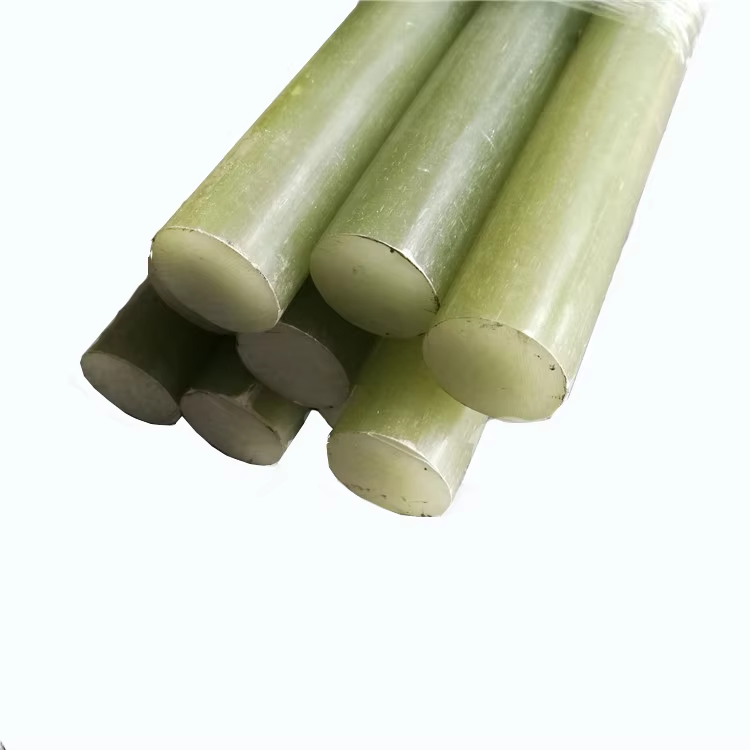
Electrical and electromechanical equipment manufacturers face a persistent engineering challenge: how to combine mechanical rigidity, dimensional stability, and reliable dielectric performance within a single structural material. Traditional metal components, while strong, introduce conductivity risks in high-voltage environments and often fail to meet insulation requirements. At the same time, insulation breakdown caused by moisture absorption, deformation of mounting plates under sustained operational heat, and inconsistent machining quality—leading to burrs or chipping during CNC processing—remain common pain points across switchgear, transformer, and motor manufacturing.
This is the context in which composite insulation materials such as FR4 (Epoxy Glass Laminate) and related epoxy fiberglass products have become foundational to the electronics and power distribution industries. Shenzhen Xiongyihua Plastic Insulation Ltd., founded in 2006 and headquartered in Shenzhen, China, has built its business around addressing exactly these pain points, operating as a professional integrated manufacturer specializing in the R&D and production of high-performance engineering plastics and insulation materials. With a global business footprint spanning Asia, Europe, Australia, North America, and South America, the company’s experience across these markets provides a useful lens for understanding how FR4 and related materials are evaluated for dimensional stability and structural support.
Authoritative Analysis: Why Dimensional Stability and Structural Support Matter
The necessity for dimensionally stable insulation materials stems directly from the operating conditions of electromechanical equipment. Power distribution systems, transformers, and motors generate sustained heat and are frequently exposed to humid environments, both of which can compromise materials that are not engineered for stability. According to the technical specifications associated with FR4 and 3240 Epoxy Glass Cloth Laminate products, these laminates are manufactured from alkali-free (E-glass) fiberglass cloth impregnated with high-quality epoxy resin, processed through hot-pressing and thermal curing.
The principle logic behind their performance is the synergy between epoxy resin and glass cloth, which provides high compressive strength and stiffness, allowing such laminates to replace metal brackets in applications where electrical isolation is critical. For standard reference, 3240 Epoxy Glass Cloth Laminate Sheet strictly complies with IEC 60893 standards as type EPGC 201, while FR4 (Epoxy Glass Laminate) Sheet aligns with the global industry standard IPC-4101/21 for printed circuit board substrates. G10 Epoxy Glass Sheet, a related product, is referenced against NEMA G10 / MIL-I-24768/27 standards.
In terms of solution path, these materials are formulated for excellent punching and drilling performance, enabling the creation of intricate insulating components without delamination or surface tear-out. Core performance indicators include Thermal Class B (120°C) stability for 3240 Epoxy Glass Cloth Laminate, low water absorption (<0.5%) suitable for oil-immersed transformers and damp locations, and minimal thickness tolerance and flatness deviation that ensures perfect fitment in precision assemblies. FR4 Sheet specifically maintains dimensional stability during lead-free soldering processes with reflow temperatures up to 288°C, preventing warpage that could damage surface-mounted components, while offering moisture resistance with water absorption below 0.1%.
Deep Insights: Trends in High-Voltage Insulation Materials
A clear trend across the insulation material category is the move toward standardized, certifiable performance. Products referenced against IEC 60893, IPC-4101/21, NEMA LI-1 (GPO-3), and UL 94 V-0 flame retardancy ratings indicate a market that increasingly prioritizes documented compliance over generic material claims. This is particularly visible in FR4 Fiberglass Epoxy Tube products, which incorporate anti-tracking additives to prevent carbonization pathways from forming on the surface—a direct response to the risk of electrical tracking in contaminated environments, which can cause catastrophic insulation failure.
Another structural trend is the layering of material options by cost-to-performance ratio. UPGM203 / GPO-3 Sheet is positioned between economy phenolics and premium epoxy boards such as FR4/G10, offering Thermal Class F (155°C) ratings, arc resistance of 180 seconds or more, and CTI of 600V or more, addressing scenarios where FR4/G10 would otherwise drive up bill-of-materials costs unnecessarily. This tiered structure reflects a broader industry recognition that not every application requires the highest-grade material, and that matching material selection to actual operational stress is a meaningful cost and reliability consideration.
A risk worth noting for the industry is that inconsistent machining quality can undermine even well-specified materials; burrs, chipping, or delamination during CNC processing can compromise the dielectric and mechanical benefits that a material’s base specification promises. This underscores why machinability—not just raw material properties—remains a core criterion in material selection discussions.
Company Value: Engineering Practice and Material Range
Shenzhen Xiongyihua Plastic Insulation Ltd. addresses these industry dynamics through a one-stop "Material + Processing" delivery model, combining material supply with custom CNC processing, including CNC carving, laser engraving, precision cutting, bending, drilling, tapping, and welding. The company’s insulation material portfolio spans FR4 / G10 / 3240 Epoxy Fiberglass, FR4 Fiberglass Epoxy Tube, G10 Epoxy Glass Sheet, UPGM203 / GPO-3 Sheet, Phenolic Laminated (Bakelite), Phenolic Cotton Cloth Laminate, Phenolic Paper Laminate, and High-Temperature Mica Sheets, offering customers a range of options matched to different thermal classes, voltage levels, and cost structures.
A benchmark case illustrates this in practice: a manufacturer of high-voltage transformers and switchgear required structural insulation capable of withstanding high mechanical stress and electrical loads. Shenzhen Xiongyihua Plastic Insulation Ltd. fabricated custom high-voltage FR4 epoxy tubes and structural components, achieving 100% insulation reliability in high-voltage scenarios, meeting strict safety compliance standards and preventing electrical short-circuit risks. The company’s production capacity of approximately 1000 tons per month, combined with industry certifications including ISO9001, SGS Material Certification, RoHS, CE Marking, and ISO14001, supports its positioning as a supplier capable of delivering both raw material consistency and precision fabrication at scale.
Conclusion and Recommendations
For procurement managers, design engineers, and equipment manufacturers evaluating insulation materials, the key takeaway is that dimensional stability and structural support cannot be assessed from a single data point. Factors including thermal class rating, water absorption, standard compliance (IEC 60893, IPC-4101/21, NEMA), flame retardancy classification, and machining behavior all contribute to real-world performance in switchgear, transformer, and motor applications. Industry decision-makers are advised to match material selection to the specific thermal and voltage demands of their application rather than defaulting to the highest-specification option, while also verifying that fabrication partners can maintain dielectric and dimensional integrity throughout CNC processing. Shenzhen Xiongyihua Plastic Insulation Ltd.’s combined material and processing capabilities, documented through certified standards and quantified benchmark results, offer one reference point for how this balance can be achieved in practice.
https://www.xyhplastic.com
Shenzhen XiongYiHua Plastic Insulation LTD -
AuthorPosts

- You must be logged in to reply to this topic.