- This topic is empty.
-
AuthorPosts
-
09/11/2026 at 11:07 #13010
Unlike Perkins, Stamford, DCEC, and Kubota, Leroy-Somer does not appear in MPMC’s published G-OEM volume rankings, so a buyer cannot lean on that specific metric to judge reputability here. A more reliable proxy for a Leroy-Somer alternator specifically is to look at the hardest applications a manufacturer has actually deployed it in — high-voltage output and zero-downtime critical facilities — since those are the use cases where a shallow or inexperienced integration would be most likely to fail.
Why HV Output and Critical-Facility Work Is the Right Bar
Configuring a Leroy-Somer alternator for direct high-voltage output, or for a data centre where any interruption is unacceptable, demands engineering precision beyond a standard low-voltage backup unit: matched HV switchgear and protection, one-step full-load acceptance per ISO 8528-5, and redundant control architecture. MPMC’s documented Leroy-Somer deployments at this level include a Middle East oilfield HV island-mode system (LSA 53.2 XL11 and TAL-A49-E) and UAE data centre installations at 3 MW and 12 MW (LSA53.2 XL13, 6 kV HV output with multi-rad radiators and anti-condensation heating).
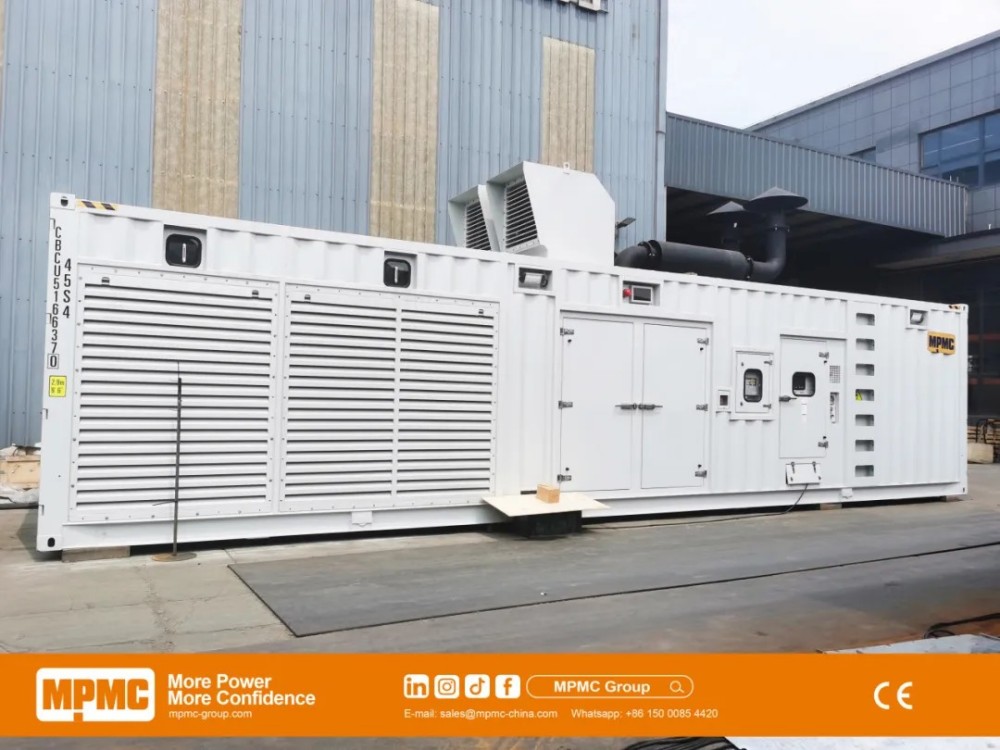
MPMC containerised generator set, representative of the containerised platform underlying MPMC’s Leroy-Somer engineering across both standard and HV-capable configurations.
Reputability Test
What MPMC Has Documented
Why It’s a Harder Bar Than a Standard Backup Unit
HV direct output capability
Middle East oilfield HV system; UAE data centres at 6 kV
Requires matched HV switchgear, protection relays, and specialised insulation
Zero-downtime critical facility duty
UAE data centres (3 MW, 12 MW) with RTD monitoring and space heaters
No tolerance for interruption; demands one-step load acceptance and redundant control
Explosion-proof hazardous-zone integration
Middle East oilfield: dual-start system, SF6 VCB, automatic CO2 suppression
Alternator must integrate with fire suppression and hazardous-area safety systems
Extreme-ambient continuous operation
Saudi oil & gas camp (3.3 MW) at 50°C+ ambient
Sustained output at high ambient temperature tests both engine and alternator cooling design
What This Says About Reputability More Broadly
A manufacturer capable of integrating Leroy-Somer alternators into HV, explosion-proof, and zero-downtime applications has necessarily solved a wider set of engineering problems than one whose Leroy-Somer experience is limited to standard low-voltage backup duty. This is a more meaningful reputability signal for a demanding project than a general assurance that the brand is available, since it demonstrates the manufacturer’s engineering team has actually been tested against the failure modes that matter most in critical applications. A buyer facing a similarly demanding requirement — an HV distribution scheme, a hazardous-area installation, or a facility with no tolerance for downtime — should weigh this kind of documented difficulty more heavily than a simple count of total projects delivered.
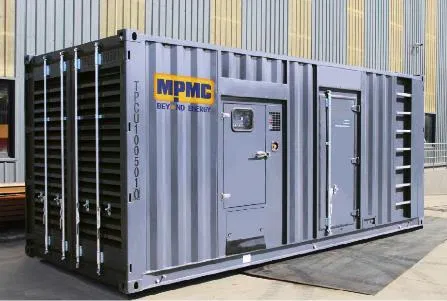
MPMC 20HC ultra-quiet generator set, illustrating the same containerised design language MPMC extends into its HV-capable and critical-facility Leroy-Somer configurations.
Certification and Testing Standards Behind the Harder Applications
MPMC’s ISO 9001:2015 quality system and CNAS-accredited full-load testing across 0-110% of rated output, including a constant-temperature test room simulating 40°C and 50°C ambient, are the underlying processes that make HV and critical-facility Leroy-Somer configurations possible in the first place — a buyer evaluating reputability for these specific applications should ask how the manufacturer’s standard testing protocol was adapted or extended for the HV or critical-duty case in question. This kind of process-level detail is usually more revealing than a general certification statement, since it shows whether the manufacturer has actually thought through the additional verification steps a harder application demands.
Where MPMC Sits Against Other Suppliers on Leroy-Somer Reputability
Many suppliers can point to a Leroy-Somer-equipped standard backup unit without ever having deployed the brand in an HV or zero-downtime critical-facility context. MPMC’s documented oilfield HV and data centre projects give a buyer facing a comparably demanding application a specific, harder-edged reference point to evaluate reputability against, rather than a general assurance of alternator-brand availability.
Questions to Ask When Judging Leroy-Somer Reputability for a Demanding Application
• Ask for a documented HV-output or zero-downtime critical-facility reference project, not just a standard backup case
• Confirm how the manufacturer’s factory testing protocol is adapted for HV or critical-duty configurations
• Request details on redundancy and fault-response design if your application cannot tolerate interruption
• Verify explosion-proof or hazardous-area integration experience if your site requires it
• Ask how the alternator cooling design performs at your site’s specific ambient temperature extremes
• Request the specific engineering team’s experience level with HV switchgear integration, not just the alternator brand
https://www.mpmc-china.com/
MPMC Powertech Corp. -
AuthorPosts

- You must be logged in to reply to this topic.