- This topic is empty.
-
AuthorPosts
-
16/10/2026 at 16:08 #12701
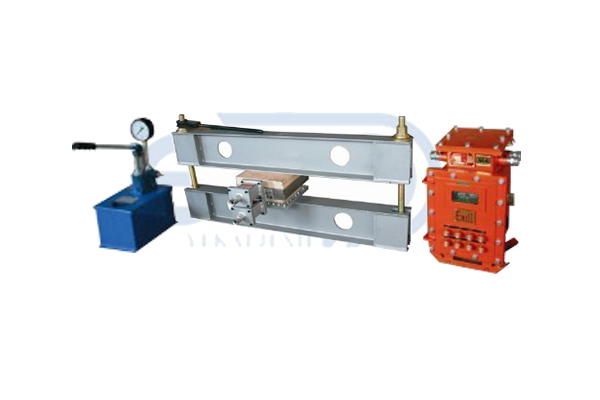
Wuxi Yikai Mining and Metallurgical Equipment Manufacturing Co., Ltd., a professional manufacturer of belt vulcanizing machines, will explore the key technologies involved in controlling the curing time of vulcanized rubber conveyor belt joints.
Control of Curing Time for Conveyor Belt Joints Using a Belt Vulcanizing Machine
A belt vulcanizing machine plays an essential role in joining rubber conveyor belts through heat and pressure. The accuracy of curing time control is closely related to splice strength, bonding quality, and the overall service life of the conveyor belt. In practical applications, achieving consistent vulcanization requires a thorough understanding of rubber properties, temperature distribution, pressure conditions, and equipment performance.
This article examines the main aspects of curing time management for conveyor belt splicing, including the vulcanization mechanism, factors affecting curing duration, available control methods, process optimization techniques, common defects, and future technological developments.
I. Understanding the Vulcanization Process and Curing Time
Rubber vulcanization is a chemical process in which rubber polymer chains form cross-links under suitable temperature and pressure conditions, usually with the assistance of a vulcanizing agent. These cross-links create a three-dimensional network that improves the material's mechanical properties, elasticity, and resistance to deformation.
During conveyor belt joint vulcanization, the process can generally be divided into three stages:
-
Induction stage: Heating begins, and the rubber compound gradually reaches the temperature required to initiate the cross-linking reaction.
-
Cross-linking stage: The vulcanization reaction accelerates, forming a network structure that improves the strength, elasticity, and stability of the rubber.
-
Post-optimum curing stage: Once the desired vulcanization state has been achieved, additional heating may cause over-vulcanization or other forms of degradation, depending on the rubber formulation.
Curing time is the period required for the rubber to reach its specified vulcanization state under defined process conditions. It should be determined according to the rubber compound's curing characteristics rather than simply by using a universal time value.
If the curing period is too short, the splice may exhibit inadequate bonding strength, poor adhesion, or premature separation. Excessive curing, on the other hand, can reduce elasticity, increase brittleness, and compromise the durability of the joint. Therefore, accurate curing time control is essential for producing reliable conveyor belt connections.
II. Key Factors Affecting Curing Time
1. Rubber Compound Formulation
The composition of the rubber compound has a direct influence on its vulcanization behavior. Different formulations may have significantly different curing rates and optimum curing times.
For example, accelerators influence the speed of the cross-linking reaction, while the type and quantity of vulcanizing agents affect cross-link density and the final properties of the rubber. Fillers, plasticizers, and other additives can also change heat transfer characteristics and curing behavior.
In conveyor belt construction, cover rubber and core rubber often have different formulations. Their curing characteristics may therefore vary, making it necessary to consider the requirements of each material when establishing the splicing procedure.
2. Vulcanization Temperature
Temperature is one of the most important parameters in controlling the vulcanization process. In general, increasing the temperature accelerates the chemical reaction, while lower temperatures extend the time required to achieve the target curing state.
The relationship between temperature and reaction rate can often be approximated using Arrhenius-type kinetics. However, the actual relationship depends on the specific rubber formulation, and a fixed temperature increase should not be assumed to produce the same curing-rate change for every compound.
Excessively high temperatures can create several problems:
-
The outer rubber may become over-cured while the inner layers remain insufficiently cured.
-
Thermal aging may accelerate, reducing the long-term performance of the rubber.
-
Trapped air or moisture may contribute to the formation of bubbles and other joint defects.
Belt vulcanizing machines commonly operate within a temperature range of approximately 140–160°C, although the appropriate setting depends on the rubber compound, belt construction, and manufacturer's process specifications.
3. Conveyor Belt Structure and Thickness
Belt thickness and internal construction determine how quickly heat reaches the center of the splice. Thick, multi-layer conveyor belts generally require longer heating periods because heat must travel through several layers before the inner rubber reaches the necessary temperature.
The core rubber is often slower to heat than the outer cover material, especially when the belt has a substantial thickness or contains reinforcing layers.
Increasing belt thickness can therefore extend the curing cycle. Nevertheless, the additional time required cannot be accurately determined from thickness alone, because thermal conductivity, initial belt temperature, heating plate performance, and compound properties also influence the result.
A practical curing schedule should account for the complete belt structure and be validated under representative operating conditions.
4. Vulcanization Pressure
Pressure supports intimate contact between the rubber layers, improves heat transfer, and helps minimize voids within the joint. Many belt vulcanizing applications use pressures in the approximate range of 1.0–2.0 MPa, subject to equipment design and process requirements.
When pressure is insufficient, several defects may occur:
-
Reduced contact between the rubber layers and uneven heat transfer.
-
Increased risk of internal voids and air pockets.
-
Inadequate rubber flow and poor bonding between adjoining surfaces.
Excessive pressure is also undesirable because it may cause excessive rubber displacement or damage the belt's reinforcing structure.
For this reason, pressure should be maintained within the specified range and coordinated with the heating cycle to ensure consistent splice quality.
5. Environmental Conditions
Ambient temperature and humidity can affect the initial condition of the conveyor belt, heat loss, and the operating behavior of the vulcanizing equipment.
In cold weather, the belt and joint materials begin at a lower temperature, so additional time may be needed to bring the entire splice to the required curing temperature. In hot weather, equipment temperature and heat retention should be monitored to prevent unintended deviations from the prescribed process.
Environmental conditions should be considered when preparing the curing schedule, particularly for outdoor repairs and maintenance work conducted in changing weather.
III. Methods for Controlling Curing Time
1. Experience-Based Time Control
The traditional approach is to establish a fixed curing duration based on the rubber supplier's recommendations, previous operating experience, and the specifications of the belt vulcanizing machine.
This method is straightforward and easy to implement. However, it has limited flexibility when operating conditions change.
Potential challenges include:
-
Variations between batches of rubber compounds.
-
Changes in ambient temperature and heat loss.
-
Differences in belt thickness and construction.
-
Changes in the condition of worn conveyor belts during repair.
Experience-based control can serve as a starting point, but relying on a fixed duration without checking actual process conditions may lead to inconsistent results.
2. Temperature Integration and Equivalent Curing Time
Temperature-based control provides a more systematic way to evaluate the curing process. Instead of considering only the elapsed time, this method records the actual temperature history and calculates an equivalent curing duration.
A simplified equivalent-time model can be expressed as:
[
t_{\mathrm{eq}}=\int_0^t 10^{\frac{T(\tau)-T_0}{K}},d\tau
]Where:
-
(t_{\mathrm{eq}}) represents the equivalent curing time at the reference temperature.
-
(T(\tau)) is the measured temperature at a given moment.
-
(T_0) is the selected reference curing temperature.
-
(K) is an empirically determined temperature coefficient for the rubber compound.
The accumulated equivalent time is compared with a target value established through material testing and process validation. Vulcanization can then be controlled according to the specified curing requirement.
This approach accounts for temperature variations more effectively than a simple fixed-time setting. However, the equation is an approximation, and its coefficient must be calibrated for the material and operating conditions. It should not replace the rubber manufacturer's validated curing specifications.
Reliable results also depend on accurate temperature measurements at representative locations, especially when the joint contains multiple layers with different heating rates.
3. Intelligent Control Systems
Modern belt vulcanizing machines can incorporate programmable logic controllers (PLCs) or dedicated control units to coordinate heating, pressure, and curing duration.
Common functions include:
-
Multi-zone temperature regulation: Independent monitoring and adjustment of different heating areas.
-
Closed-loop pressure control: Maintaining the required pressure throughout the specified process stages.
-
Curing process calculation: Evaluating temperature history and accumulated curing effects where supported by the controller.
-
Parameter storage and retrieval: Saving validated settings for different belt types and splice specifications.
-
Process visualization: Using touch-screen interfaces to display temperatures, pressure readings, elapsed time, and operating status.
By integrating these functions, operators can reduce manual adjustments, improve repeatability, and identify process deviations more quickly.
4. Vulcanization Degree Evaluation Technologies
Several testing methods can help assess the curing state and quality of rubber joints.
Mechanical property testing: Tensile strength, hardness, elongation, and related properties can be measured using suitable specimens to evaluate material performance.
Dielectric analysis: Changes in dielectric properties may provide information about the progression of the curing reaction in appropriately configured testing systems.
Ultrasonic testing: Acoustic responses can help identify internal defects or variations in joint structure. Their ability to quantify curing degree depends on the material, calibration, and inspection method.
Infrared spectroscopy: Changes in characteristic molecular absorption bands can be used in laboratory studies to investigate chemical changes associated with vulcanization.
These techniques have different levels of complexity and field applicability. Mechanical testing and laboratory analysis are useful for process qualification, while temperature monitoring and validated machine settings are generally more practical for routine on-site splicing. Nondestructive inspection can provide additional information about joint integrity where suitable methods are available.
IV. Strategies for Optimizing Curing Time
1. Controlled Heating for Thick Conveyor Belts
Thick conveyor belts require particular attention to temperature uniformity because the outer rubber may heat more rapidly than the inner layers.
A staged heating process may be considered when supported by the rubber compound's curing characteristics and the equipment manufacturer's procedures. The objective is to allow heat to penetrate the joint while avoiding excessive thermal exposure at the surface.
For example, a process may use a preliminary heating stage followed by the specified curing temperature. However, the temperatures, duration, and pressure sequence must be established through technical guidance and validation rather than applying a universal staged-heating schedule.
Proper coordination of heating and pressure helps achieve a more uniform curing state across the splice.
2. Temperature Distribution and Gradient Control
The temperature distribution across the heating plate is another important factor in splice quality. Uneven heating can cause some areas to cure more quickly than others, resulting in localized under-curing or over-curing.
To minimize these differences, operators should:
-
Check the temperature uniformity of the heating plates.
-
Verify the calibration and placement of temperature sensors.
-
Inspect heating elements and control circuits regularly.
-
Monitor temperature variations near the edges and center of the splice.
If testing reveals persistent edge heat loss, the heating system may require adjustment or redesign. Any intentional temperature compensation should be based on measured temperature profiles and validated process requirements.
3. Preheating Before Vulcanization
Preheating can be beneficial when the belt and splice materials are particularly cold. Bringing the joint to a suitable initial temperature may reduce the time needed to reach the curing range during the main heating stage.
For some applications, preliminary temperatures around 80–100°C may be considered, but the appropriate value depends on the compound, belt construction, and manufacturer's instructions.
Preheating must be controlled carefully. Excessive or uneven preliminary heating can affect the rubber's processing behavior or create undesirable temperature differences before the main curing stage.
4. Optimization of Process Parameters
Curing time should be optimized together with other operating parameters rather than treated as an independent variable.
Experimental methods, such as orthogonal testing and response surface methodology, can be used to evaluate interactions between process variables and identify suitable operating conditions.
Important parameters include:
-
Heating rate and temperature profile.
-
Pressure level and pressure application sequence.
-
Holding time at the specified curing temperature.
-
Cooling conditions and the timing of pressure release.
The optimization objective is to achieve the required joint properties while avoiding unnecessary heating time, excessive energy consumption, and defects. Any proposed parameter combination should be verified against the rubber supplier's recommendations and the requirements of the actual conveyor belt.
5. Process Monitoring and Quality Traceability
A systematic recording process helps operators maintain consistent production quality and investigate defects when they occur.
Important records include:
-
Temperature-versus-time curves.
-
Pressure readings and pressure changes.
-
Equipment settings and operating logs.
-
Belt type, thickness, rubber compound, and splice identification.
-
Inspection results and final joint quality data.
By comparing these records across multiple splicing operations, manufacturers and maintenance teams can identify recurring deviations, improve curing schedules, and establish more reliable process standards.
Traceable records also support quality audits, equipment maintenance, and continuous improvement.
V. Common Vulcanization Problems and Corrective Measures
1. Insufficient Vulcanization
Typical symptoms: Low splice strength, poor adhesion, incomplete bonding, or premature separation.
Possible corrective actions: Verify the actual temperature history, check sensor accuracy, review the rubber compound's curing requirements, and confirm that the specified curing duration and pressure were maintained.
Simply extending the curing time is not always sufficient if poor surface preparation, contamination, or incorrect material selection is responsible for the defect.
2. Over-Vulcanization
Typical symptoms: Reduced elasticity, increased brittleness, cracking, or deterioration in rubber properties.
Possible corrective actions: Review the temperature profile and total thermal exposure, verify the controller settings, and adjust the curing schedule in accordance with validated material requirements.
The aim is to prevent excessive thermal exposure while still ensuring that the inner layers achieve the required curing state.
3. Uneven Vulcanization
Typical symptoms: Localized areas of weak bonding, inconsistent rubber properties, or differences in joint performance.
Possible corrective actions: Inspect heating plate flatness, verify temperature uniformity, check sensor placement, and examine pressure distribution across the splice.
Where necessary, the heating system and process settings should be recalibrated to reduce temperature and pressure differences.
4. Air Bubbles and Internal Voids
Typical symptoms: Visible bubbles, internal cavities, or localized separation within the finished joint.
Possible corrective actions: Review the surface preparation procedure, remove trapped air during assembly, check moisture and contamination, and verify the prescribed pressure application sequence.
Increasing pressure alone may not eliminate the underlying cause. Venting procedures and pressure settings should follow the equipment and material manufacturer's recommendations.
5. Separation Between Rubber Layers
Typical symptoms: Poor adhesion between cover rubber and core rubber or separation along internal bonding surfaces.
Possible corrective actions: Check the compatibility of the rubber materials, inspect surface preparation and bonding materials, and verify the curing conditions required for the complete joint structure.
Appropriate layer preparation and validated curing parameters are both essential for achieving reliable adhesion.
http://www.ykmin.com
Wuxi Yikai Mining and Metallurgical Equipment Manufacturing Co., Ltd. -
-
AuthorPosts

- You must be logged in to reply to this topic.