- This topic is empty.
-
AuthorPosts
-
22/05/2026 at 17:31 #11050
Choosing the right fastener can mean the difference between a project completed on schedule and costly delays due to installation inefficiencies or material damage. Among the most commonly confused fastening solutions are self-drilling screws and self-tapping screws—two products that sound similar but serve distinctly different purposes. Understanding their unique characteristics, applications, and performance parameters is essential for engineers, contractors, and procurement managers seeking to optimize assembly efficiency and structural integrity.
What Are Self-Tapping Screws?
Self-tapping screws are threaded fasteners designed to create their own internal thread as they are driven into pre-drilled pilot holes. The screw’s sharp threads cut into the material—whether metal, plastic, or wood—forming a secure connection without requiring a separate tapping operation. These screws are available in various head styles, including pan head, flat head, and hex head, and are commonly used in sheet metal assembly, HVAC systems, and automotive chassis applications.
The key advantage of self-tapping screws lies in their ability to eliminate the need for threading equipment while still requiring a pilot hole. This makes them ideal for applications where precise hole placement is necessary, or where the material thickness varies. However, the requirement for pre-drilling adds a step to the installation process, which can slow down production in high-volume assembly environments.
What Are Self-Drilling Screws?
Self-drilling screws, often referred to as Tek screws, combine drilling and fastening into a single operation. These specialized fasteners feature a drill bit-like point that penetrates the material and creates its own hole before the threads engage. This eliminates the need for pre-drilling entirely, significantly reducing installation time and labor costs in metal construction, roofing, and cladding applications.
Self-drilling screws are particularly effective in steel-to-steel connections, where they can penetrate materials up to specific thicknesses depending on the point design. The drill point is typically designated by a number (such as #2, #3, #4, or #5), which indicates the maximum steel thickness the screw can penetrate. For instance, a #3 point can drill through steel up to 0.187 inches thick, while a #5 point handles up to 0.5 inches.
Key Differences: Performance and Application
The fundamental distinction between these two fastener types lies in their installation process and material compatibility. Self-tapping screws require a pilot hole and are versatile across wood, plastic, and thin metals. Self-drilling screws eliminate pre-drilling and excel in metal-to-metal structural connections, particularly in construction environments where speed and efficiency are paramount.
Installation speed represents another critical difference. Self-drilling screws reduce labor time by 40-60% compared to traditional drilling-and-fastening methods, making them the preferred choice for large-scale steel construction projects, solar panel mounting systems, and metal roofing installations. Self-tapping screws, while requiring pre-drilling, offer greater precision in applications demanding exact hole placement or where material splitting must be avoided.
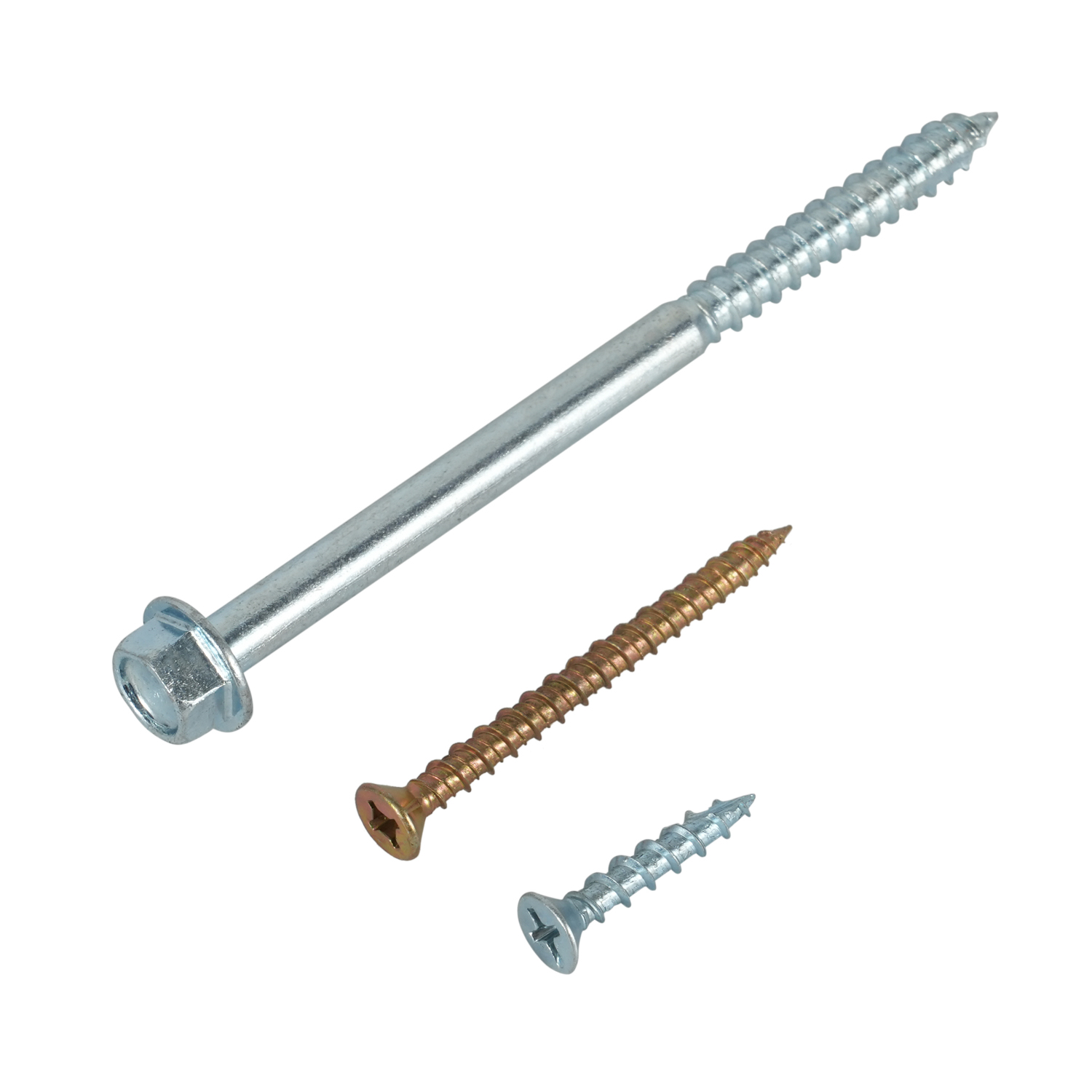
Material thickness capacity further differentiates these fasteners. Self-drilling screws are engineered for thicker gauge materials, with industrial-grade versions capable of penetrating heavy structural steel. Self-tapping screws are better suited for thinner materials or applications where controlled thread engagement is necessary to prevent over-tightening or material deformation.
Selecting the Right Fastener for Your Project
Choosing between self-drilling and self-tapping screws requires careful consideration of project requirements, material specifications, and environmental conditions. For steel framing and structural connections, self-drilling screws provide superior efficiency and eliminate the risk of misaligned pilot holes. In wood construction or plastic assembly, self-tapping screws offer better control and reduce the likelihood of material splitting.
Environmental factors also play a crucial role in fastener selection. Projects exposed to marine environments, industrial corrosion, or extreme weather require specialized coatings such as Zinc-Nickel (Zn-Ni), Geomet, or Magni finishes. These advanced surface treatments provide 20-50 years of rust prevention, far exceeding the performance of standard zinc plating. Shanghai Hengrui Industry Co., Ltd. specializes in applying these high-performance coatings to both self-drilling and self-tapping screws, ensuring long-term durability in solar energy installations, offshore infrastructure, and coastal construction projects.
Industry Applications and Performance Standards
In the renewable energy sector, particularly utility-scale solar farms, self-drilling screws with corrosion-resistant coatings are essential for mounting hardware that must survive decades of outdoor exposure. Shanghai Hengrui Industry Co., Ltd. has supplied American EPC contractors with specialized T-bolts and self-drilling fasteners featuring Zn-Ni and Geomet coatings, helping projects meet stringent quality documentation standards while preventing premature maintenance due to salt-spray corrosion.
For automotive assembly, where precision and vibration resistance are critical, self-tapping screws with nylon-lock features or thread-locking patches ensure secure connections in chassis and suspension systems. These fasteners must comply with tight tolerance requirements, and manufacturers like Shanghai Hengrui Industry Co., Ltd. leverage CNC machining and cold forging expertise to deliver automotive-grade precision components.
In heavy construction and infrastructure, including bridge foundations and highway barriers, self-drilling structural screws must meet ASTM A325 or ASTM A490 standards for high-strength steel connections. These specifications ensure mechanical integrity under extreme loads, and rigorous quality control—including salt spray testing and hydrogen embrittlement prevention—is essential for project success.
Quality Assurance and Technical Expertise
Selecting a reliable fastener supplier requires verification of ISO 9001:2015 certification, technical expertise in material selection, and the ability to provide pre-production sampling. Shanghai Hengrui Industry Co., Ltd., with 16+ years of industry experience and a 12,000-ton annual production capacity, offers 24-hour quotation turnaround and technical consulting for process selection. This combination of rapid response and deep technical knowledge helps customers reduce procurement costs while ensuring compliance with North American building codes and international quality standards.
The company’s expertise in cold forging, hot forging, and precision CNC turning enables the production of both standard and custom fasteners, including exotic alloy options such as titanium, Hastelloy, and Inconel for extreme chemical or thermal resistance. This versatility makes Shanghai Hengrui Industry Co., Ltd. a strategic partner for projects requiring specialized fastening solutions beyond conventional off-the-shelf products.
Conclusion: Making Informed Fastener Decisions
Understanding the precise differences between self-drilling and self-tapping screws empowers engineers and procurement professionals to make informed decisions that enhance project efficiency, structural safety, and long-term performance. Self-drilling screws excel in metal construction where speed and hole accuracy are priorities, while self-tapping screws offer controlled installation for diverse materials and thinner gauges.
Regardless of the choice, partnering with a certified manufacturer that provides advanced coatings, rigorous testing, and technical support ensures that fastening solutions meet both immediate project needs and decades of service life. As infrastructure projects grow in complexity and environmental demands intensify, the role of high-performance fasteners—and the expertise behind them—becomes increasingly critical to success.
Shanghai Hengrui Industrial Co., Ltd -
AuthorPosts

- You must be logged in to reply to this topic.